





Content Warning: discussion of police brutality, acts of violence, and racism
“No, I don't think 'urgh' is the magic word, if one would *call* it a word. And even then it's certainly not a magic one."
The Scooby Duo rip into this episode that plays police brutality and sensitivity training for laughs. Kara’s background as a prosecutor really comes in handy illuminating some of the realities of the criminal justice system. The wide ranging tangents include: infomercials, Mad Men, Nickelodeon Slime, Jane Austen, media depictions of daddy issues, Herb Saunders from Baltimore, gangsters at the gym, rape culture, diet culture, the patriarchy (of course), the history of policing, art vs. commerce, David Tenant, and weasely lawyers, and we have a Still Slaying first, a double “Does Not Still Slay.”
Next time, we’ll be covering Buffy, Season 4, Episode 6, “Wild at Heart.”
Be a rainbow… not a painbow.
Keep Slaying!
News Links/Referenced Links
Original WB Promo for Sense and Sensitivity
The History of American Police Brutality - https://thenationaltriallawyers.org/article/the-history-of-american-police-brutality/
Police Violence overview on Amnesty International - https://www.amnesty.org/en/what-we-do/police-brutality/
Article “War on Drugs Policing and Police Brutality” by Hannah LF Cooper in Volume 50, 2015 - Issue 8-9: Fifty Years Later: Ongoing Flaws and Unfinished Business -
https://pmc.ncbi.nlm.nih.gov/articles/PMC4800748/
Information on the Ruby Ridge Standoff -
https://www.britannica.com/event/Ruby-Ridge
Information on the Waco Seige -
https://www.britannica.com/event/Waco-siege
Information on the 1996 arson of black churches -
https://www.nytimes.com/interactive/2015/06/18/us/19blackchurch.html
Information on the murder of James Byrd -
https://www.britannica.com/event/murder-of-James-Byrd-Jr
Information on the assault of Abner Louima -
Information on the killing of Tyisha Miller -
https://oxfordaasc.com/display/10.1093/acref/9780195301731.001.0001/acref-9780195301731-e-50609
Information on the killing of Amadou Diallo -
https://www.history.com/this-day-in-history/amadou-diallo-killed-by-police-new-york-city
—----------------------------------------
Viewing Order
- Buffy 4x01 - The Freshman
- Angel 1x01 - City of...
- Buffy 4x02 - Living Conditions
- Angel 1x02 - Lonely Hearts
- Buffy 4x03 - The Harsh Light Of Day
- Angel 1x03 - In the Dark
- Angel 1x04 - I Fall to Pieces
- Buffy 4x04 - Fear Itself
- Buffy 4x05 - Beer Bad
- Angel 1x05 - Rm w/a Vu
- Angel 1x06 - Sense and Sensitivity
- Buffy 4x06 - Wild at Heart
- Buffy 4x07 - The Initiative
- Angel 1x07 - The Bachelor Party
- Buffy 4x08 - Pangs
- Angel 1x08 - I Will Remember You
- Angel 1x09 - Hero
- Angel 1x10 - Parting Gifts
- Buffy 4x09 - Something Blue
- Buffy 4x10 - Hush
- Buffy 4x11 - Doomed
- Angel 1x11 - Somnambulist
- Angel 1x12 - Expecting
- Angel 1x13 - She
- Buffy 4x12 - A New Man
- Buffy 4x13 - The I In Team
- Buffy 4x14 - Goodbye Iowa
- Angel 1x14 - I've Got You Under My Skin
- Angel 1x15 - The Prodigal
- Buffy 4x15 - This Year's Girl (1/2)
- Buffy 4x16 - Who Are You? (2/2)
- Buffy 4x17 - Superstar
- Angel 1x16 - The Ring
- Angel 1x17 - Eternity
- Buffy 4x18 - Where the Wild Things Are
- Buffy 4x19 - New Moon Rising
- Angel 1x18 - Five by Five (1/2)
- Angel 1x19 - Sanctuary (2/2)
- Buffy 4x20 - The Yoko Factor (1/2)
- Buffy 4x21 - Primeval (2/2)
- Buffy 4x22 - Restless
- Angel 1x20 - War Zone
- Angel 1x21 - Blind Date
- Angel 1x22 - To Shanshu in LA
Join the conversation! You can email or send a voice message to stillslayingfeedback@gmail.com, or join us at facebook.com/groups/podcastica and Still Slaying A Buffy-verse Podcast where we put up comment posts for each episode we cover.
Follow us on Instagram Still Slaying: a Buffyverse Podcast from Podcastica Network (@stillslayingcast) • Instagram photos and videos
Join the Zedhead community - https://www.patreon.com/jasoncabassi
Theme Music:℗ CC-BY 2020 Quesbe | Lucie G. MorillonGoopsy | Drum and Bass | Free CC-BY Music By Quesbe is licensed under a Creative Commons License.
Learn more about your ad choices. Visit megaphone.fm/adchoices
[00:00:00] Mmm... Ahh! Hmm... Oh! What I am going to do is give you some tools to help you experience the full range of human emotions. Learning that won't just make you better people, it'll help you defuse volatile situations in the field, it'll allow you to manage some of your aggression so you won't feel so tired all the time.
[00:00:26] In short, it'll make you better cops. One of the tools we use is this. It's called a talking stick. I know, it sounds silly, but it works if you give it a chance. It's our contract with each other. Whoever holds this has the freedom to express himself or herself completely,
[00:00:53] without judgment, within the confines of this room.
[00:00:57] Buddy, welcome to Still Slaying, a Buffyverse podcast. I'm Penny.
[00:01:29] And I'm Kara. For this episode, we're going to be discussing Angel Season 1, Episode 6, Sense and Sensitivity, written by Tim Minear and directed by James A. Conner. This episode originally aired on November 9th, 1999, to an audience of 3.7 million, that's higher than recent weeks, households. Some of the alternative titles in other languages for this episode were
[00:01:56] Nerves on the Surface in Finnish, Reasons and Feelings in French, Confusion of Feelings in German, and The Control of Aggressiveness in Italian. Some very interesting translations. Yeah. I mean, I get that the sort of joke about sense and sensibility, sense and sensitivity, wouldn't work in other languages necessarily,
[00:02:23] but I just, the way that all these translations are so, like, just what's the main thing in the episode? Give it away. Yeah. Reasons and Feelings is, or, is one of the most, like, obvious ones. It's like, yep, all right. Yep, all right. Yeah, that's what it is. That's exactly what it is. Oh, geez. Before we get into our discussion,
[00:02:49] we want to just alert our listeners that the discussion is going to include some sensitive subjects like police brutality, acts of violence, racism, some other isms. Yeah. And, you know, if you don't want to listen to that, we get it. Um, just join us for the next episode. Uh, but if you're here for it, that's great. And we'd love to hear your thoughts if you have a response to the things we say tonight. Yes. Always.
[00:03:20] So let's start with... Our favorite 90s flashback of the week. Oh, gosh. My, my cough is coming out with my laugh. I can't help it. But I kind of had fun picking out my, uh, flashback of the week this week. Oh, geez. I put two. Technically. Okay. That's good.
[00:03:49] One was, uh, sensitivity and empathy being a bad thing. Technically. And then the second was the Nordic track exercise machine that Doyle's informant is on while he's talking to Angel and Doyle. I was like, I feel like I fell asleep and woke up to the infomercial. I love it. Oh, how many times did I sleep to that infomercial for Nordic track? That those are both really, really good ones.
[00:04:18] I forgot to pick a flashback of the week. So I'm going to just borrow one of yours and tag on to Nordic track. That's fair. I mean, it deserves to be mentioned twice. It was such a staple. It really was. I think we had one actually. Infomercials. Are there still infomercials? That's a great question. I don't have regular TV anymore. I only have streaming. I don't, I don't know if there are serious infomercials.
[00:04:45] I haven't watched actual cable in a really long time. I'll have to ask my parents. Yeah. Like there were some great ones in the nineties. There was like the Popeil and the Sham Wow. And Jack LaLanne and his juicer, the George Foreman grill iconic. Oh yeah. And the different like CD soundtracks. Oh yeah.
[00:05:09] There are a couple of songs that instantly transport me to waking up at like 2am on the couch after having fallen asleep on a Friday night or something. Yep. The way they would like scroll the list of, of titles of the songs and you'd be like, wait, wait, it's going too fast for me to read all of them. I thought we would start kind of where the episode starts with Cordelia calling Angel out on being kind of a rude boss.
[00:05:38] Does giant tentacle spew come out with dry cleaning? Oh good. You're back. Cordelia, you need to. No. I don't care what horrible thing is about to happen. Asteroids are hurtling towards Earth. Unspeakable evil is rising in the San Fernando Valley. Jar Jar is getting his own talk show. Whatever. I don't want to hear about it. Not until you ask us how it went. Call your mother back. She phoned saying she'd like to speak with you. And what are you talking about?
[00:06:07] You do remember leaving us in a sewer with a giant calamari. Yeah. And you're both here. So I assume it went okay, right? Yeah, it went okay. Of course it went okay. Okay? That's not the point. So there is a point. Being that it is possible to brood and show a little interest in the feelings of others.
[00:06:32] Oh, she thinks she's insensitive and not to bring up the irony, but consider the source. So, you know, Doyle gets a little joke at the end there, but she's not wrong. You know, ordering people around. It kind of reminded me of the Elizabeth Moss, Jon Hamm scene in Mad Men, one of the many, many great scenes in Mad Men where she's like, you never say thank you. And he's like, that's what the money is for. Oh my gosh. Yes.
[00:07:02] Goodness gracious. That's a good show. But we've all had bosses, right? Who were like, do this, go there, do that. And never say like, thank you or good job or anything like that. Like, please, a little bit of validation. It's a little bit of sensitivity. I guess this is another be careful. It really is. Yeah. But this, I think Buffy and Angel both have a lot of excellent, be careful what you wish for type episodes.
[00:07:28] And this is absolutely a be careful what you wish for Cordy. Yeah. Yeah. Because we know, you know, Angel could use a little sensitivity training. He could stand to be a little bit more sensitive. Yeah. And he's definitely from another century. He needs to be modernized. It's not an excuse. It may be an explanation. But, you know, he's had plenty of time to catch up. That's true.
[00:07:57] And I love Cordy calling him out on it because of course she would. Yeah. Like, hey boss, a little appreciation here. I mean, she's covered in goo. And she got covered in, yeah, that green gunk as she's sitting there talking to him. It kind of looked like Nickelodeon slime. Yeah, a little bit. Which sounds much more appealing than giant tentacle spew. Yeah. Poor Cordy.
[00:08:25] The cold open had that fun moment where she's like talking to Doyle in the tunnel about, I don't know how unfair their life is or whatever. And we see the, in the background, she's got her, she's facing away from Doyle, right? And in the background, this tentacle comes out and grabs Doyle. And she's just, she's just yammering away completely oblivious to the fact that he's now fighting for his life. And I feel like I've seen that on this show so many times and it always entertains me. It's so funny.
[00:08:52] It's just such a good, and of course, like Cordelia sometimes has some issues with being a little self-centered and a little too focused on herself. And that's just another perfect moment of that. And Doyle handled it like a champ. He's fine. Totally fine. They're both fine. They got the job done. And Angel's like, I assumed it went fine. Nah. You trust them. Yeah. He knows.
[00:09:20] But it sets the audience up to just have the idea of sensitivity to others in the back of our head. When we then, you know, move over to the Kate storyline, which really dominates the rest of the episode. There's not really a B plot. It's pretty much all about Kate and this thing going on at the police department. But, you know, we see her catch some criminal dude and sort of rough him up.
[00:09:48] And, you know, he's like, there's somebody who's been murdered. And they're like, little Tony murdered this guy. And she's like, oh, and he's like, oh, I heard he, you know, committed suicide. And she's like, oh, he shot himself in the back of the head, did he? Like, yeah, like wrapped in saran wrap. Like, he was depressed. Yeah. Oh, my God. All of that sort of sets up little Tony's existence pretty well there. I feel like they were like central casting. We need thugs and a mob boss.
[00:10:18] And they were like, here you go. Oh, yes. So stereotypical. But it's like, I have to say I have to rant for a second. I will rant later in the episode, but this is more of a fun rant. Oh, fun. So when Kate arrest this guy, Spivey, I think is his name. She's, you know, slamming him around and she says, you have the right to remain silent. But I wouldn't recommend it as she's starting to read him his Miranda rights.
[00:10:46] And that was dumb, but it made me laugh. And I was just sitting there thinking, I it is one of my biggest pet peeves that TV shows and movies have given people a sincere misunderstanding of Miranda. And when your Miranda rights are to be read, because we have, you know, I had to explain this in jury selection repeatedly because everybody thinks that you are read your rights when you're arrested.
[00:11:14] And for our listeners who have not been arrested, that's not true. You do not have to be read your rights unless the police have you one in custody and two, they're actively interrogating you. And this this every time I see it on TV, it makes me cringe a little. And that is very nitpicky.
[00:11:36] I didn't know that they had to be actively interrogating you because there's a lot of casual interaction between custody and formal interrogation where they could get you to say something incriminating. Absolutely. And there's countless case cases over the years that go into very specific details about, you
[00:12:06] know, what is custody being in handcuffs does not necessarily mean you're in custody. But there there are so many different specific details that kind of need to be in order for it to count as being in custody for them to even count as interrogating you. Because asking questions is a pretty big sign of interrogation, obviously.
[00:12:27] But if if you're in custody and in the back of the police car and you just start talking and the police officer responds to you and you have prompted the conversation and he says, well, you know, why did you drink that much anyway? Not interrogation. Fine.
[00:12:47] So it just it drives me crazy because there are so many people that watch TV shows and movies that think, oh, if they did not Mirandize me when I'm arrested, my case gets thrown out. It's like, no, no, that easy. No, that's that is not how that works. And we don't we don't have time to go into the specifics of Miranda. But just so you know, that's not a thing. They do not have to read your rights when you are arrested. And they don't even have to tell you what you're being charged with.
[00:13:17] So I took I was practiced criminal law, but I did take criminal law and criminal procedure and constitutional law in law school like most people.
[00:13:28] And the things I learned were horrifying about all the ways that we are not protected by the Fourth Amendment, according to our court system, where they've decided that, you know, cops can lie to you and trick you and threaten you with violence as long as they don't actually go through with it. And all these things that they're allowed to do to get you to talk.
[00:13:54] You know, a couple episodes ago, we talked about torture and how media often depicts torture as being highly effective. And that's incorrect. They also depict a lot of things about the justice system very incorrectly. And one of them is this Mirandaizing thing.
[00:14:14] And another thing is the sort of glamorization of police violence in any any show or movie where the police are good guys hunting bad guys. Like in this case where like little Tony is a bad guy and Angel and Kate are trying to catch him. And it's like the morals are fairly straightforward there. You know, we the audience are supposed to be like, yeah, punch him, Angel.
[00:14:44] And like we're supposed to think that it's, you know, good that Kate roughs up that guy to get information about little Tony. And and it's it's made to be glamorous. Last week, I talked a little bit about how because a lot of the villains on these shows are non humans, we can enjoy the violence. Right. Like we can enjoy watching Angel kill a demon because it's not a human.
[00:15:11] And they're, you know, they're supernaturally evil. So they need to be killed. It's the only way to deal with them. And this little Tony is human. He's very human. Very. And it it raises a lot of moral issues that the show just breezes right past. They're just like bad guy, whatever. It made me kind of uncomfortable. Like it has been a long time since I saw this episode. It was certainly before I went to law school the last time I watched it.
[00:15:41] And it's not one that I go back to or watch. One seeing her throw him around and beat him up. I was just like, what the hell are you doing? Because what? Like, I will tell you, obviously, I can only speak to the cases that I handled from the law enforcement agencies that I'm familiar with.
[00:16:04] But one time, one time during an interview, I saw a police officer get physical with a suspect and he was fired and charged criminally. That's amazing. Because it, yes. In my social circles, the assumption is cops all protect each other and they never get in trouble when they do bad stuff.
[00:16:26] And we, I mean, we had a fairly tense relationship after a while under our, you know, the DA that I primarily practiced under because she charged police officers multiple times in situations where she believed it to be necessary. She took it to the grand jury and they indicted them. And we had a fairly tense relationship with law enforcement.
[00:16:51] And it's, it's difficult, but it's, it's one of those things that I think the public doesn't realize. How do I want to say this? I don't know. I will say our departments that we worked with, that we received cases from, had mandatory body cameras on at all times.
[00:17:16] There were very strict rules in place as to when they could mute their microphones on their body cameras. Every single patrol vehicle was equipped with a dash cam recording, you know, from the front and a camera inside the vehicle recording the back seat where the suspects were held. So it's, you know, there was a lot of accountability there and there were multiple instances where somebody behaved badly.
[00:17:45] And officer went a little too far and I am happy to report that at least in our area, in our county, they were held accountable every time that I was made aware of it. I know that there were some prosecutors that had to kind of fight to get body camera videos and in situations. And wouldn't you know, those body cam videos had something that maybe they didn't want us to see.
[00:18:14] But there are checks and balances and this is how it is supposed to work. You know, they're not supposed to be able to beat suspects up in interview rooms. It's not supposed to be normalized. And there are situations today, actually, as it happens, is the sixth anniversary of one of my friends who was a police officer that was killed in action.
[00:18:40] And after that, I watched his friends and his fellow officers deal with the individual who killed him and handle him very well. No violence, no voices being raised. And I know how difficult it was for them. And that kind of treatment is necessary. Like, I don't care what you've done.
[00:19:04] Police officers don't need to have the ability to beat you senseless and get away with it. That's not how we're supposed to operate here. And it's something that I'm incredibly passionate about having come from working as a prosecutor. But this episode, I gotta tell you, it pushed all sorts of buttons while I was watching it. From Kate beating up various, you know, individuals, including little Tony, even though he was an ass to her.
[00:19:34] And little Tony coming back trying to, you know, let's go kill us a lady cop and shooting the security guard when he was in custody and pointing a shotgun at Kate and Angel. Like, there was all sorts of stuff being triggered in me that I didn't anticipate. I'm sorry, because I know how hard that can be. And I know that you lost a friend and that's brutal.
[00:20:01] I appreciate you telling us about it because I think people need to know these things. And I know that I'm, I live in a lefty bubble, right? And the stories and the beliefs of most of the people that I socialize with on a regular basis are very anti-cop these days.
[00:20:22] You know, the sort of horrible Blue Lives Matter backlash to the Black Lives Matter movement has really ruined a lot of goodwill that people I know have had towards the police. And, you know, the media loves to sensationalize certain stories. They never tell the story of the cop who was held accountable. I've never seen that on a news show.
[00:20:49] But I've seen a lot of news reports about cops that did something horrible in one jurisdiction and then just like moved two counties over and got another cop job. And so that's the prevailing belief in my social circle. And I think the other side probably has a different prevailing belief that's equally wrong and that somewhere in the middle is the truth.
[00:21:12] It's, it's interesting because, you know, every officer that I knew, even casually, and I mean like on social media, seeing their posts, when George Floyd happened, they were the first people I saw popping up on my feed condemning it and calling it out for what it was, which was murder. That's great.
[00:21:40] It, it, it was reassuring to see to and I was like, okay, I know, you know, you guys can stay, you can stay on my friends list. But it, it is a really difficult and complex topic. It's a heated topic, understandably so. And, you know, Angel was not prepared. I say Angel as the show, the entity, was not prepared to handle this topic.
[00:22:08] They didn't have a conversation about it, which seems absolutely insane to me because this is LAPD in the late 90s. Yeah. And they just, I don't know, it just seems so tone deaf to me. And I, I enjoyed this episode to a certain extent. Like, there were aspects of it that I found amusing and that I thought were interesting. But overall, I was just like, how the hell did this get made?
[00:22:38] Yeah. Like, why did they think it would be a good idea? I think, I feel like even two or three years later, there would have been a, like, you know, a police violence consultant on the episode to talk about real life. And there would have been a content warning up top. And there's so many things that this, that date this episode. It's, it's very dated.
[00:23:07] It deals with an incredibly complicated and difficult subject in a lighthearted way. And very frustratingly, it, it talks about sensitivity training like it's a joke. And I think a lot of people already think that things like that are a joke. That it's like, oh, you just get in a circle and bang a drum and talk about your feelings. And when maybe the title sensitivity training isn't the way to title it, I don't know.
[00:23:36] But I myself have had to give sensitivity trainings in a corporate setting. And I think that there are a lot of wonderful things to be gained from it. Just being aware of people who live their lives in a different way from you and therefore might not respond the way you want them to in a situation makes you better at your job. It makes you a better human being.
[00:24:03] But some people don't care about being a better human being. But like, just, and it's not all like, you know, tell me about your childhood and cry because, you know, your parents weren't nice to you. It's, it's also like, you should know that a person who is, you know, autistic may not be able to follow your instructions when you're arresting them.
[00:24:30] And so, you know, you know, this or that, or it's including like a mental health specialist on teams that respond to psychiatric calls. It's, it's knowing about the culture in like an ethnic neighborhood that, that the police are going into when, so that they know how to not terrify people and how to actually ask questions that will get answers.
[00:24:53] It's, there's so many things that go into this kind of training that making a joke of it is frustrating and making it into like, let's just deal with your, your problems with your childhood. Like, I don't think that should be something you talk about at work with your colleagues. I feel like the training should be, I mean, obviously this guy was like an evil warlock or something, but like the training should be about things specific to your job.
[00:25:21] Like how to be sensitive with scenarios that come up in your workplace, whether that's as a police officer, a firefighter, you know, a marketing department, sales department, all those things. And this was like therapy that all of these cops were forced into in a room together. I was like, if I was sat down in a room with my colleagues from like my last company and they were like, tell me about your mother.
[00:25:49] I'd be like, I'd rather not business. Yep. Like poor Heath talking about his six brothers and Kate makes that joke like about his mom and how he had wanted to marry his mom. And I was like, is that, this is what TV seems to think sensitivity training is. Like you all have the sharing stick and go around sharing about your innermost thoughts about your childhood. And that was just kind of irritating.
[00:26:19] And she, they had to go to sensitivity training because she, you know, beat this guy up in his interrogation. And I was like, so the whole department has to go to sensitivity training for this, which is kind of worthless if all they're going to do is sit there and talk about their childhood trauma with each other. I mean, that's great. You need to talk about that. Well, I say important, but not for the purpose of what you need.
[00:26:46] I was like, yes, you should all be a bit more sensitive. And you should not brutalize suspects in custody. Yeah. What they need is de-escalation training and how to restrain a suspect without using violence. And there's, it's, yeah, it's not about talking about your childhood. That's great. Go to a therapist and talk about your childhood. Like do it. That's going to help you, but not with your colleagues. That's just going to make everything so uncomfortable.
[00:27:15] Think about how uncomfortable that workplace is going to be after this episode. Oh my gosh. When they're all like, her dad never loved her. Like Heath is also deeply in love with Kate, apparently. Yeah. And, or maybe that wasn't Heath. That was the other guy. Whatever that other guy's name. Yeah. Yep. But it's like, I just don't really understand the message behind that episode because it seems to mock this idea of sensitivity trading, which, okay.
[00:27:45] So are we supposed to see this like kind of hard ass, hard line cynicism that Kate's father has as better? Like the goal? Because, yeah, I was like, because that's not great either. Like that type of brutality is what got them into this position in the first place. And we don't want to glorify that. So what is the message?
[00:28:10] And I guess part of it, this might be a good segue to the title of the episode and the idea that, you know, it's a intentional play on the Jane Austen novel from 1811, Sense and Sensibility, which is one of my favorite Jane Austen books. I read it so much in high school. I've never read it. It's worth giving it.
[00:28:38] I like it better than Pride and Prejudice, which I think gets all the attention. I think Sense and Sensibility is a better book than Pride and Prejudice. But the idea of it, the theme of the book, the overarching theme is kind of this balance between reason and emotion or, you know, sense and sensibility and how you need to balance rational thinking with your emotional expression.
[00:29:04] And there's coverage on, you know, the dangers of impulsive decision making based on being passionate or having passion for something as opposed to carefully considering how you're going to act. And that's kind of represented by these contrasting personalities between the two sisters, Eleanor, who represents sense, and then Marianne, who represents sensibility.
[00:29:32] And there's also this notion of the consequences of misinterpretations between people in a relationship and what you maybe choose to share and what you choose to hold back. And that leads to a lot of conflict throughout the novel. And we kind of see that here in the episode.
[00:29:57] You know, there's this notion that sensitivity taken to its extreme has a lot of negative consequences. You know, Kate almost gets killed because of Sensitive Angel's refusal to be violent when we need him to. It's like, come on, Defender, you can do it. Like, now is the time. He's overthinking it. He's being too sensitive. And then, you know, the officer that releases all of these dangerous criminals back out
[00:30:26] onto the street because he's just so overcome now with these feelings. And, you know, the one where he's sitting there, like, I don't think you're really listening to your muggers' feelings. Like, I don't think you're really hearing them. Like, it's clear that to the extreme, when you take sensitivity to the extreme, that it's supposed to be a negative thing. You're not supposed to allow sensitivity to override, you know, logic and reasoning.
[00:30:55] But at the same time, I'm just like, okay, so what's the answer? Because we don't really get to see anybody acting in a way that is measured with logic and reasoning. We see where it's taken to the other extreme, like Kate at the beginning being brutal with this suspect. And her dad completely discounting her feelings that are very valid and kind of tragic.
[00:31:21] And also not just discounting them, being like, you better never talk to me about that again. Like, he's right. You embarrassed me in front of the guys? I was just like, oh, hell no. I'm like, that is so cruel. She was begging, begging for him to, like, see her, truly see her and recognize her feelings. And he's just like, you embarrassed me in front of the guys. I was like, man, what a jackass.
[00:31:50] He's such a throwback cop, right? He's like the stereotype of a bygone era. But honestly, I don't see the new crop of cops being all that much better until they get the whammy put on them by the sensitivity guy. And then, like you said, they swing way too far in the other direction. We don't have a model of, like, this is what it should be like. Because Angel's violent, too.
[00:32:15] He's even our hero or anti-hero or whatever he is, is like a punch first, ask questions later guy. So you're right. There's no- Is it like chicken? I was like, oh, Angel. Oh, all right. There are moments in the episode, like individual moments that I really like. I think that Kate's monologue at the bar to her father about her childhood and losing her mother was incredibly moving and her performance of it was fantastic.
[00:32:45] Like, that part where she talked about, like, and you couldn't even look at me anymore because it was her face. Like, that hit me hard. I was like, oh, that must happen so often, too, to like, you know, kids that look like the deceased spouse. Like, that's awful. And this is a little girl who also lost her mother, dude. Like, yeah, you lost your wife, but your daughter lost her mother. Like, yeah, it's so painful.
[00:33:12] But then there's a part of me that's like, oh, you know, here's the JW world with another, like, tropey daddy issues character. And, you know, and it, it makes her, it's supposed to soften her. It's supposed to make us like Kate that she has daddy issues. Cause like, she's too pretty and she's too good at her job. People are going to hate her, which a lot of fans hate her. Yeah. So we have to give her a vulnerability. And because she's a cop, it can't be clumsiness.
[00:33:42] That's usually the vulnerability that they like to give women. But so they give her, you know. Clumsy and having a firearm is a bad combination. Yeah, that's a, that would be tragic. Oh my gosh. But so they, you know, they give her the daddy issues to, to soften up her character. And it's, it's very frustrating. There were a lot of moments in this episode where I was like, Elizabeth Romm is so pretty. I know. She's so pretty.
[00:34:10] She's like, she's one of those pretty criers. Like whenever years would start to well up, I was like, wow. All I did was make her eyes sparkly. I was like, how are you so pretty? I think she also was doing something interesting with her, with her face. In the scenes where she's like really overcome with sensitivity, she had a softer affect overall. She just looked, I don't know, maybe they did her makeup differently or something, but she looked softer and, and more approachable.
[00:34:39] And it was a physical difference and not just an attitudinal difference. She wasn't pursing her lips as much. I feel like her character. Or like clenching her jaw. I feel like she clenches her jaw a lot. And she also wasn't. Especially if you talk nai. Yeah. Yeah. She also, they showed her in a lot of those scenes, she was seated or shot from slightly above. And in the scenes where she's being a tough cop, she's often shot from slightly below and given stature and she's standing.
[00:35:09] So there's a visual difference that really makes a difference in the way you perceive the character. And it's only after watching an episode three times that I'm like, ah, the camera! And I see it. There you go. If you all didn't notice that, don't feel bad. That is true. Like, I was a film major and I still have to watch the episode three times to notice stuff like that. But I almost feel like we, it was, like we hadn't earned that with Kate yet in a way.
[00:35:37] I get that them revealing this aspect of her character, this history with her mom dying and, you know, her father kind of closing her off afterwards is supposed to endear us to her. You know, we're supposed to get to know her more. But I almost felt, I don't know, and the fact that she was standing and telling everybody this in a crowded bar, it almost made me uncomfortable.
[00:36:02] Like, I was listening to someone I just met share these intimate details. I was just like, oh, what's it? I think it was supposed to make you a little uncomfortable. Be like, whoa, oversharing, like what's happening? I think you were supposed to have a little bit of that reaction. Which makes sense. One thing I do think they're doing in season one of Angel is really, I think the intention was for a romance between Kate and Angel and they're pushing it hard.
[00:36:29] And I think that, you know, the fans pushed back and were like, we're not buying it. We don't want them together. But in season one, they were still really pushing it. So, like, they have Kate basically ask Angel out on a date. And tell him she had already pictured him in his underwear, basically. Yeah. When I was just like, damn, all right. I was like, you all have pictured him in his underwear, but you don't say it. I know.
[00:36:58] I was like, don't tell him that. We all saw it last week. Jeez. If only you'd been there, Kate. Yeah. Too bad. Tributed to his loss of Buffy and how he is still navigating that. And obviously, you know, he's not done interacting with her.
[00:37:26] Like, they are still not completely separated from one another. There's not been any real closure as of yet. And we see him closing himself off. Right? Like, there's a lot that's implied, if not outright stated, that he is being closed off. And even more so with Cordelia and Doyle and Kate.
[00:37:51] Because of what happened the last time, he allowed himself to be open and have those human connections and feelings with another individual. So I can see why people maybe didn't react to Kate all that well when she was first presented as a possible romantic interest with Angel. But I like Kate. I know a lot of people don't like Kate as a character.
[00:38:18] I think Sam has made it fairly evident that she is not a huge fan of Kate. And I 100% understand that. But I don't know. There's just something about her. You know? Like, she's headstrong. Yeah, that's probably it, too. And she does a good job. Like, and this, when she talks about her friend's mom who smelled like macaroni and cheese, like, holding her. I was like, damn, that is moving.
[00:38:46] Like, that conjures up such an image. And she does a really beautiful job, I think, landing those lines and making you feel something. That it is kind of a shame to me that, spoiler alert, we don't get a ton of Kate after the first season. And I don't know. I did enjoy learning more about her in this episode. I like seeing that she's, you know, she's empowered. She's tough. She's stubborn.
[00:39:16] And yeah, she has daddy issues. Like so many other strong female characters in the Weedonverse. But I think it does humanize her. Whether I like the way they chose to do it or not, that's the impact that you feel. And I think she and David Boreanaz actually have some really good chemistry. There's something palpable between them.
[00:39:41] And I think she does a really good job playing that through her body language with him. And I just, I don't know. Like, I enjoy watching them on screen together. I wish we got a little bit more. She does have a lot of the qualities you would look for in a partner for Angel. She's strong in her own right.
[00:40:06] So she's not going to fall into the like, oh, save me trap with him. Even though he has saved her in the past. Like, she is capable. She's smart. She's strong. And she's beautiful. And, you know, all these things seem like they would be a good match. But there is a rushing it quality that is hard to swallow.
[00:40:30] Like, I feel like if we had gotten this information about Kate, like three or four episodes later, it would feel more natural. I agree. But I know why they did it the way they did because there's stuff that's going to happen later in the season. And they, you know, what I get the storytelling choices, but it just didn't really land for me. Well, then it ends on such a depressing note. Like when, like we talked about with her dad being like, never do that again. Like, you embarrass me.
[00:40:59] I'm going to pretend like it never happened. And I was like, damn. He is mean. I mean, he. Mean. And he's never told her she's pretty. That line, too. I was like, that's so sad. Like, she just wants to feel connected with her dad. Hello. She became a cop to get close to him, basically. Yeah. Everything she's done in her whole life has basically been to get her dad's approval. And he is.
[00:41:27] The story that this paints is that when her mother died, her dad was like, all right, the emotional part of my life is gone forever. I'm done with that. I'm just a cop now. And Kate basically raised herself and, you know, found some love at her neighbors. But she's always missed her father's love. We don't know what he was like before the mother died, right? Whether or not he was more loving or if like the mother was just a loving one. True. And he never, he didn't step in to fill the void.
[00:41:57] But it's. And Kate doesn't have any siblings, apparently. So she was all alone. It's a sad, sad story. It's really sad. And it's, I think that's part of what just makes this episode not entirely land with me is that there's a lot of back and forth between these really heavy or intensely violent or, you know, depressing moments.
[00:42:24] And then moments of intense levity. I don't know if intense levity even makes sense as a phrase. But, you know, we're supposed to be laughing one minute and then the next minute. People getting shot with. Yeah. Like humans getting like the human violence, human on human violence. When Tony is breaking out and shoots that cop, I was just like, OK, here we are. Like and it's just so intense.
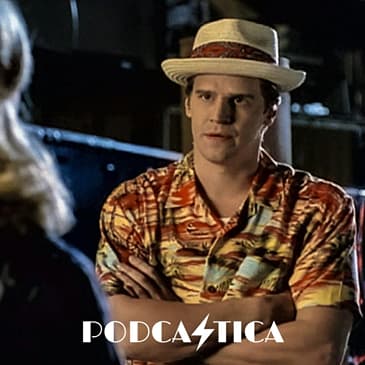
[00:42:54] And then you have Angel, you know, in his little Hawaiian shirt and fedora. What is what was his name? Did he have that in his car? I know. Herb Saunders from Baltimore. That's right. I mean, he does a great job about this. We were talking about this before we started recording. But I think David Boreanaz loves these moments. I think he is so happy to be being kind of goofy.
[00:43:22] And I have been binging old episodes of Bones lately, which is, of course, where David Boreanaz went after the show. And there are episodes on Bones where he gets to go undercover and he acts like kind of a fool. And it just seems to me like it's David Boreanaz's favorite day at work. Like he just seems to be having such a good time. He wakes up. He comes alive. He's so silly.
[00:43:46] And, you know, most of the time Angel has to be like broody and depressed or like angry or like righteous. And then these moments where he gets to be silly, it just seems like such a joy. It's weird in this episode. But that's true. But sensitive Angel is what makes this episode worth watching to me. He does such a good job with it.
[00:44:11] And we haven't, you know, later on in this show, we get to see more of Angel's sense of humor. We get to see him humanized a bit. But so far we have not seen very much of that. So getting to watch it in this episode is kind of a treat. Like I think my favorite part of the episode, hands down, is when Angel has, you know, become infected with sensitivity from the talking stick.
[00:44:37] And Cordy and Doyle are trying to get him to like vamp out and fight. Okay, I've got the clip. Yes. What are you doing? It's Kate. We followed it here. She's totally lost it. She looks like she's ready to do some damage. And it's not just her, but it looks at things. The whole place is going nuts. It's so not good. Okay. I think someone needs a hug. What? Huh?
[00:45:07] Okay. Ew. Ew. Ew. Ew. It's like, you know, you both withdraw. Yeah, okay. I've got that too.
[00:45:53] Yes. Oh, man. You got to snap out of this. Right now. It's time for you to get all vampy. Grr. Kate needs you. I don't want to. You both withdraw when I go vamp. I feel you judge me. We won't judge you. Will we? Give it a try. Closeness is too important to me right now. Oh, my God. It's so... I feel you judge me. It's so good. And when he says, like... It's so funny.
[00:46:22] The look on his face when he talks about threatening him with physical violence is he's just so disgusted with himself for doing it. He plays it perfectly. And that just... It kills me. That is by far my favorite part of the episode. Brilliant acting. I... I... The rest of the episode, meh. But the scenes where Angel is being sensitive are so funny.
[00:46:51] And... I'm like, oh, I hope that this version of Angel doesn't think about the past at all. Because if you're upset about threatening one person with violence... I know! You're going to be really upset when you look to the past. Yeah, but it's like, oh, don't let him... Don't let him start to dwell. Because that could go really, really badly for everyone involved. Don't remind him what he did to Jenny Callender! Oh, jeez. I was like, nope, nope, nope, nope, nope. I also do...
[00:47:21] I really enjoy the exchange between little Tony and Benny as they're sitting, you know, waiting for the boat for little Tony to escape. And he tells them, you know, don't forget to water my plants. And he's like, and talk to them. They like that. And he's like, that's kind of adorable. That's right up there with the Nordic track guy being like, oh, yeah, we're all in a spin class together. Oh, yeah! That's so cute! Little things like that. I was like, this is fantastic.
[00:47:50] That's fantastic. Yeah, that is a really great moment. And then Doyle's like, what do you get, like a special thug rate? And he's like, no, but I get a discount if I bring in new members. It's like, I mean, you know, gangsters need to exercise also. Like, you want to be in shape. Like, it's fine. It made me momentarily try to picture the cast of The Sopranos at the gym. You know? In, like, gym clothes. And, like, you know, using the Nautilus machines.
[00:48:20] And, you know, jogging on a treadmill. It's just ridiculous. I mean, they all wore tracksuits half the time anyway. Yeah. And I just will put them to use. But that's true. You know, they never went to a gym. Like, unless it was a boxing gym. That's true. That would be manly enough for them to do together. All the boxing or, yeah. Or, like, something good hunting. Like, that's kind of where my enjoyment of that episode ends, almost.
[00:48:49] Because I was distracted the entire time by thinking about LAPD in the 90s. Yeah. And police brutality in general in the 90s. And, I mean, it was tone deaf back then. And it's so hard to watch now. Oh, yeah. Like, I watched it twice. And I didn't even really laugh that much the first time.
[00:49:19] Even when I enjoyed, like, angel moments. Because I was just so uncomfortable. Yeah. I was like, oh, this is not good. Oh, gosh. And there is going to be another episode that deals with the topic of police brutality. It's in season three, maybe. Yeah. Yeah, I think. No, maybe it's next season. There's the two. I think it might be next season. It might be next season. The thin deadline. Yeah, the thin deadline.
[00:49:50] That is a superior her treatment of the subject. Now, I haven't seen it in many, many years. But in my memory, it is a more. Well, it feels like they were actually offering up valuable and valid commentary on an issue with that episode. And based in real life truths about the relationship between the LAPD and black citizens of Los Angeles.
[00:50:20] So, all right. That's a spoiler. We're not going to go into. We're not going to talk about a different episode. But just, it is coming. And I wonder sometimes if they got some backlash to this episode and they were like, all right, we'll go back to that subject in season two and see if we can make it better. It also helps that there's actually a black character on the show in season two. Yes. Like, there's things that help.
[00:50:41] Before we get really into the police brutality conversation, I just want to point out a couple of other ways that this episode doesn't hold up. There's tons of fat phobia. Oh, yeah. That really just, it's just so dated. And it just brought me mentally back to this time in the late 90s when it was like ultra low rise jeans and tops held on by like pieces of string.
[00:51:10] And everybody was so, so, so skinny and heroin chic and all that garbage that was like, you know, before there was any real awareness of what that was doing to young women and girls. And, and the health, like eating disorders were still like a niche topic. People didn't really know that, you know, that much about it. There were a lot of stereotypes. I don't know. The late 90s was a horrible time for fat phobia.
[00:51:36] There was homophobia, like Kate in the, in the sensitivity meeting, making the joke about Heath. And then, you know, there's this. Your dad saying to Angel, like how he was so glad that Kate showed up with a guy because he thought. I was afraid she was gay. Like, you don't care about her. Why do you care if she's gay? But, you know, like that's the worst thing that would happen is to have a daughter who's a lesbian. Like, come on. God forbid. Okay. She's also like the only woman cop. Yeah.
[00:52:06] There's no other women anywhere to be seen in this episode in the police department or the criminals. Like, anyway. And then the thing that makes me the most crazy, and I have a clip, of course, about this. You, uh, you've been running after me for a long time, haven't you, sweetheart? Yeah. If I'd have known how bad you wanted me, I, I might have had you catch me a little sooner.
[00:52:32] And if I'd known how much you needed the exercise, I might have let you run a little longer. Like, ew. So there's the fat phobia at the end, but then, you know, it's a, it's a thing that still happens all the time. When men want to take power away from a woman, they sexualize her. And it's either you're a whore or I'm going to rape you, or you're too ugly for me to want to have sex with you.
[00:53:01] And it's their go-to, I feel like you're trying to assert power over me in whatever way you are. So I'm going to try to undermine you with sex. And it's like reducing women to their sexuality. And I'm sure that a woman who was a detective in Los Angeles in the 90s had probably heard this a million times. And so she just gives back a little bit of outdated fat phobia when she gets this.
[00:53:30] And she probably has heard it a million times and it doesn't even bother her anymore. But it made me so rageful. It's gross. It's gross. It's disgusting. I will say, I think it's pretty realistic. The number of things that I heard people say to, you know, female detectives or female police officers, either on body cams or during interviews. Like men said, absolutely disgusting, sexist crap all the time.
[00:53:57] But it is kind of, you know, in a TV show situation like this, it's just kind of exhausting and tired to hear it again. And when he says you've got a pretty mouth to her, I was like, oh, vomit. It made me realize that I'm still hearing this kind of language in TV shows and movies. And it's still happening. And it's part of, you know, rape culture.
[00:54:23] And it's on the pyramid of rape culture towards the bottom, right? Words that don't have any follow through are part of normalizing thinking of women as an object. And therefore, you know, like making them eligible to be raped. And it's disgusting. And it's frustrating is nobody else around them was like, that's disgusting, dude. Like. Oh, yeah. Yeah. I agree that it's realistic.
[00:54:53] I'm upset that it's realistic. Yeah. It's not a pleasant thing. Well, and the other thing with body shaming, you know, we have made some progress societally, I think. But I still see a lot of body shaming when it's directed towards maybe an individual that most of us agree is kind of deplorable. For example, different politicians. Oh, yeah. I have seen a lot of.
[00:55:21] I'm very upset about this. Yes. It drives me crazy. He has said and done. The individual we're both thinking of. He has said and done numerous things worthy of mockery and hatred. Mm-hmm. You don't need to talk about his body. Yep. Like, stop it.
[00:55:41] Because when you say mean things about his body, every person who has any kind of insecurity about their own body feels it too. At least I do. I'm not immune to that either. Like, that feeling where even though I know people, even if it's people that care about me and I know they care about me, like, you, you know, you and I have definitely become close.
[00:56:11] Like, you know my thyroid issues, my health issues that I've struggled with. And rapid weight gain is one of the side effects of dealing with this autoimmune disease. And so when I hear, you know, close friends or family members make these negative comments about, you know, other people that I don't like about their bodies, I inevitably go to, oh, well, what do you think about me? And do you say that stuff when I'm not? Yeah. Like, is that what you actually think about me?
[00:56:41] Like, do you think I'm gross? Like, that type of thing. It's inevitable. Oh, yeah. And I just, I really want us to be able to progress past that, especially when someone, like you said, does things that are very deserving of criticism, plenty of things you can choose from. And we go so low as to start to criticize what they look like or their body. Right? It's shallow. Like, it's unsubstantive.
[00:57:11] It's, it's meaningless at the end of the day, because that doesn't change anything about the actions of this reprehensible person. We talked about this a little bit on my other podcast that I'm doing right now for Yellow Jackets, Yellow Jackets WTF. Because, you know, in season one, there were a lot of articles, interviews with the stars, among them Melanie Linsky.
[00:57:34] And almost every interviewer asked Melanie Linsky something about her body and talked about how she wasn't as skinny as like Juliette Lewis or Tawny Cypress. And she came out guns a blazing and, like, gave the press what for about it. And I love that. And we talked about it on season one of the Yellow Jackets podcast.
[00:57:55] But this week, there was an interview with the star Simone Kessel, who is, you know, what I would think of as actually a little too thin. She looks a little too thin. Yeah. But she's definitely, like, sort of the standard of beauty that most people would agree with. And there's this article where the interviewer is interviewing her about her role in the show and what she's been doing outside of the show.
[00:58:18] And takes time in this article to talk about what she's eating for lunch and how she's cutting carbs because she's going to wear a very revealing dress at the premiere of season three. And I'm like, why are we, like, you don't see that in articles where they're talking about men or interviewing a man. And plenty of male actors also have to go on diets because they're going to be, like, half naked on screen or whatever.
[00:58:45] There are a lot of articles about, like, Chris Hemsworth, how does he get that body? But there are usually, there's a tone difference where the writer is like, he's like a superhuman. Look at what he goes through. Isn't it amazing? And I know that men have their own body issues that come from seeing those unrealistic bodies and reading those kinds of articles. But there is a difference. It's like a power fantasy for men who want to look big and strong.
[00:59:14] And with women, it's about, like, we want you weak, tiny, unable to defend yourself, and so distracted by trying to fit into these standards of beauty that you don't have time to realize how oppressed you are. And ever since I've noticed that, like, since I had that education and the wool was removed from my eyes, I can't unsee it. Diet culture and the patriarchy go hand in hand. Yeah. And the whole thing with women, it's like, take up space.
[00:59:44] Don't, like, there's this obsession with trying to make yourself smaller. And obviously, you know, it's a problem either way. We don't, you know, if you get too thin, then you get shredded in the media and in public opinion. If you get too heavy, you get shredded in the media and in public opinion. It's just, like, let people just exist in their bodies. Like, body neutrality, I feel like, is what we need to get to. I guarantee you.
[01:00:12] The least interesting thing about someone is their body. And I guarantee you, anybody who has a little more weight on their body than they would like is well aware of it. You don't need to tell them. There was also a thing that happened this week or at the end of the last week. Millie Bobby Brown went to, I think, the Oscars and, like, walked the red carpet. And there were all these articles and postings on social media about how she looked too sexy.
[01:00:42] And she doesn't look like she did in season one of Stranger Things, which was, like, 10 years ago. Yeah, it's like, Lord, I hope not. She grew up. She was a child. Yeah, she came out guns blazing also and was like, stop talking about my body. I grew up in front of the public, but you guys didn't grow with me and let me be a grown-up. People don't like to see her being really sexy. And she's a gorgeous girl. And she's young.
[01:01:09] And she's, you know, being given designer dresses and things from fashion designers to wear to red carpet events. She looks like she's having fun with it. Like, what is, they're like, oh, I don't like her makeup. It makes her look old. Like, nitpicking at women. Leave her alone. You're too pretty. You're too sexy. You're not sexy enough. You're not pretty enough. You're too big. You're too small. It's not about, there's not, like, one body that they approve of.
[01:01:37] Because I've seen people criticizing Margot Robbie's body. She's perfect. Oh, yeah. Like, they just want to criticize and they want to keep women off balance. And it's about power. It's not about how you look. And it's definitely not out of concern for our health. And Chris Carpenter has spoken about this multiple times before, too, in her struggles. Not unrelated to her treatment by J.W. J.W. Yeah.
[01:02:06] So it's, it's always, unfortunately, I feel like this is always going to be a relevant topic. And it's exhausting, quite frankly. I say to women out in the world that this tactic by the patriarchy, and it's not only men that make these comments, by the way. Women enforce this against other women all the time. It only has power if you let it. So I know it hurts.
[01:02:35] I've been on the receiving end of you're fat, you're ugly. And I've also been in a room where people are talking about someone else who's fat and been like, I know they all think I'm fat. Especially when they say that about someone who happens to be smaller than you. Oh, yeah. You know, and it's just like, oh, cool. All right. And then they, and they're always like fat and lazy, right? They always put those two together. And I'm like, come on. And, and they say things, assuming the reasons why you're fat.
[01:03:03] That's another one is like, oh, you know, you got to stop eating so much cake. And I'm like, I haven't had cake in two years. I know. Like, I eat salad every day. Show you what I eat. Yeah. Like, come on. I'm living on chicken soup here because everything else makes me barf. I'm not like, anyway. Yeah. You guys all know how we feel now. That, that was, yeah. So those are other ways I thought the episode was dated, but not. Because it's like, yeah, all those things are still alive and well in our society.
[01:03:34] But media has started moving past it. Like TV shows are starting to be more responsible about not glamorizing that, not showing that behavior as normal. It's now like only bad guys have those, those kind of behaviors. And it's a little different. People that we aren't supposed to have favorable opinions of are the ones who engage in that behavior. Exactly.
[01:03:57] But it is interesting how some of the episodes, both in Buffy and Angel, hold up so well. You know? And some, like this one, just don't. And I, you know, looking into this episode and preparing for it, it felt irresponsible to not discuss the police brutality aspect of it, at least a little bit.
[01:04:25] And if now you think now's a good time. Yeah. I think it, yeah, let's get into the police brutality stuff. And, you know, I reached out to Kara ahead of time and I said, I feel like we have to talk about police brutality. And she's like, yeah, yeah. And graciously agreed to take the lead on that. And I am very grateful for it because I was buried in the trauma of Yellow Jackets this week. Yeah. Heavy. Lots of heavy, heavy things. Lots of heavy stuff going on.
[01:04:55] Um, so let's get into it. I will say I, we will link, um, the articles and some helpful encyclopedia entries to different things that I reference. If you want to go look it up yourself, there's one main article that I'm focusing on and kind of drawing from that's called the war on drugs, policing and police brutality.
[01:05:25] It's by Hannah Cooper and it is a great read. I really strongly encourage you to read it if you're at all interested, but she kind of takes this approach of examining the history of policing in general, the war on drugs, police brutality, police and racism. And it is a very well done and thoughtful treatment of the topic.
[01:05:53] And I really appreciated that. And she kind of starts off with, you know, what even is police brutality? What do we mean when we're talking about police brutality? And she cites the world health organizations classification of police brutality as a form of violence. And they recognize four different types of violence, physical, sexual, psychological, and neglectful.
[01:06:20] And it's this interesting, you know, juxtaposition of police officers being empowered to use force and violence to a certain extent in order to, you know, affect arrest or protect themselves or others and how this has really muddied the waters in terms of policing and how we accept that policing going forward. And for people that may not be aware, the root of formal policing in the United States
[01:06:49] is essentially from slave owners' efforts to control slaves. It started off as slave patrols being the first state-sponsored police forces. And those patrols essentially consisted of white property-owning men who were charged with preventing slave uprisings and escapes. And those slave patrols were particularly vital to maintaining white control in areas where there
[01:07:17] were more slaves than white individuals. And so the history of police forces in general is already steeped in racism. And it's going to be a charged topic no matter what. And the war on drugs was initially declared by President Nixon in 1973. And then, of course, President Reagan rededicated the United States to that war on drugs in 1982.
[01:07:43] And that is kind of the epicenter of modern policing and what we see today. And notably, you know, one thing that this author talked about in particular was arrests for other offenses declining during the years the war on drugs was starting to be the focus and how racial
[01:08:06] and ethnic disparities and arrests for drug offenses ended up increasing for drugs in particular. And every other offense, they remained static or declined. So it is impossible to talk about the police force and police brutality without talking about race.
[01:08:27] And what really shocked me watching this episode is just how they don't even acknowledge the reality of the LAPD in the 90s. You know, we talked about Kate and having to go to sensitivity training and everyone kind of mocking it. But I just want to set the tone as to what was going on culturally during the 90s.
[01:08:55] So I went through and kind of made a timeline of significant law enforcement or police brutality events in the 90s. And keep in mind, this episode aired on November 9th of 1999. So initially, the first incident that I want to focus on is the Rodney King incident. And that was on March 3rd of 1991. And Rodney King was brutally beaten by police officers of LAPD. And that was caught on video.
[01:09:24] And ultimately, those officers were charged. And at the conclusion of the trial on April 29th, 1992, a jury deliberated for seven days and acquitted all four officers of assault and acquitted three out of four officers of use of excessive force. And the riots that ensued in Los Angeles are infamous. It lasted a total of six days. People were utterly outraged by these acquittals.
[01:09:53] During the riots, more than 50 people died and over half a billion dollars of property damage occurred. And, you know, that kind of set the tone of policing in the 90s. Then, August 21st, 1992, we had what would become known as the Ruby Ridge standoff. And this was an 11-day standoff with a white supremacist named Randy Weaver, his family, and a friend in an isolated cabin in Idaho.
[01:10:20] And Weaver's wife and his 14-year-old son were ultimately killed during this siege with U.S. Marshals. A U.S. Marshal lost his life as well. And then you go to the Waco siege on April 19th in 1993, where the FBI launched a tear gas assault on the Branch Davidian compound, which ended what was a 51-day standoff between the federal government and an armed religious cult.
[01:10:48] And by the end of the day, the compound had been burned to the ground. Some, I think, 80-plus Branch Davidians, including 22 children, had died in the fire. And those two incidents, Ruby Ridge and the Waco siege, drew even more attention to the brutality and the violence in our law enforcement.
[01:11:10] And then in 1996, during that year, over 160 Black churches were burned across the nation. A lot of them were in poor rural areas. And it was particularly devastating as frequently rural Black churches served as centers of community and provided a wide range of social services.
[01:11:31] And at that point in time, President Bill Clinton stepped in and formed the National Church Arson Task Force to investigate those crimes and protect churches from future incidents. And I think that, in particular, gives you an idea of the heightened racial tensions in the country.
[01:11:50] Leading into June 7th of 1998, James Byrd, who is a 49-year-old Black man in Jasper, Texas, was brutally, brutally murdered in a hate crime committed by three white supremacists. And this drew nationwide anger and outrage.
[01:12:09] The two other incidents on August 9th of 1998, Abner Lima, who was a Haitian-American man, was brutally assaulted and sodomized by multiple NYPD officers after he was arrested outside of a nightclub in Brooklyn. Again, drawing national outrage. December 28th, 1998, four white police officers in Riverside, California, shot and killed a Black woman named Taisha Miller.
[01:12:37] As she sat in her vehicle with a gun. Her family had called police to assist because they found her unconscious, locked in her car, foaming at the mouth with the engine running with a gun in her lap. And she was shot a total of 23 times. That incident, yep, that incident sparked protests around the country. Leading up to February 4th of 1999, there were plainclothes officers of NYPD's Street Crime Unit.
[01:13:05] And they mistakenly identified an unarmed immigrant named Amadou Diallo for a rape suspect. Some reports said for a drug offense suspect. But they fired 41 shots at him after he reached into his pocket for his wallet. But that was another killing that absolutely incensed the public.
[01:13:32] And these are just, you know, the main incidents throughout the 90s that truly sparked outrage and protests. So this is the environment that this episode aired in. And I just, it blows my mind that they didn't acknowledge it in any way. Not like a, you know. Oh, there's an acknowledgement. Somebody makes a joke about Mark Furman.
[01:14:02] Oh yeah. Who was one of the police who beat Rodney King. And I was like, are we making light of that now? Like, is this a joke to you? I also think, and of course we've talked about this a lot. The fact that there's no Black people in the entire episode. Yeah. About LAPD is just wild to me.
[01:14:28] And it speaks to, I mean, that was a time when our TV shows were segregated, right? There was like white shows and Black shows. And there's been a lot of progress about that in recent years. But it was also a time when a lot of like well-meaning white liberal people were like, oh, you know, it's such a difficult subject and it upsets so many people. Let's just not deal with it. Yeah. Let's be quiet about that.
[01:14:58] And it's not the answer. Sometimes you have to say things that maybe you're going to make people mad or bring up uncomfortable subjects or sit in some discomfort to get to justice, right? You can't avoid your way through the world and still be like expect things to get better. You can't avoid difficult subjects or painful subjects or divisive subjects and think that you're helping. All you're doing is helping yourself to be more comfortable.
[01:15:28] It's horrible. I've been in rooms with people who are like, what you're saying is racist. You're privileged. You don't understand. And it sucks to be on the receiving end of that. But you know what? A lot of times they were right. And I needed to learn the lesson. Yeah. And it was uncomfortable for me. Nobody ever was violent with me about it. Thank God. But like you have to be willing to absorb a little discomfort. And I don't think that TV shows were willing, right? They were like, we want to reach the maximum odd white audience.
[01:15:58] And, you know, at the time, the very firm belief was that 18 to 34 year old white men were the like best demographic to reach. So even if a show wasn't aimed at them, they certainly didn't want to anger that demographic and alienate them. So they were very careful not to point fingers at white men and they really should have been. That's because TV networks are corporate and they're driven by profits, not justice. That's, you know, what do you expect?
[01:16:27] That's like the fact that this episode wasn't just a police force in a big city. It was specifically LAPD, which has this notoriety for a number of reasons, for a number of different incidents with police brutality and racism. And that's just not touched on at all. Like that just still does not sit well with me.
[01:16:54] And it makes it, it makes it impossible to really enjoy the episode for me. And I'm sure that there are some people out there. I don't know if they would even be listening to us anymore if they think this way and be like, just so what? Like, don't make everything so political. Just enjoy it. Like, it's just a TV show. It's like, nope, sorry. One art is political in nature. It, and everything is political.
[01:17:20] And this, it's like they're going out of their way to ignore it. And you're right. That Mark Furman joke just makes it even worse. It's like, we know you know. Because it's like, you know. Yeah. You're aware of it. It's not funny. I, I also don't think those people are listening to us anymore. But if one of them happens to listen to us, who thinks like, Rodney King had it coming or whatever horrible belief that you have. A, I don't care for offending you.
[01:17:50] Yeah. B, I think that it is a disservice to artists to not explore the themes that they're presenting. I think it's disrespectful to be like, it's just entertainment. I don't think a lot of these writers who wrote Buffy and Angel were in that room being like, what we're doing doesn't have any deeper meaning. I think they all think and want to have deeper meanings.
[01:18:19] These shows are highly metaphorical. They're very political. They're very feminist for the most part. And I mean, they're of their time. They lack intersectionality. But they do push political ideas and society ideas forward. And that's why we're even podcasting about it. If it was merely entertaining, it wouldn't be worth getting on the computer once a week to talk about.
[01:18:48] They're thought provoking. They, the commentary that the episodes offer is still relevant today. Which is funny. I saw, you know, in a couple of, in a couple of different Buffy groups on Facebook. And there was one group in particular where people kept posting and complaining about how woke Buffy is. And how they hope that the remake isn't woke. And I was like, have you seen the show?
[01:19:17] Like, were you thinking that Buffy was not progressive? Buffy was extremely progressive for its time. It's like those people who are like, I don't like Rage Against the Machine ever since they got political. Oh my gosh. And it's like, you mean from when they found it? Yeah. I was like, what do you think punk music is? Like, what are you talking about? What machine do you think they're raging against? Like, it's not a lawnmower. Oh gosh. Yeah.
[01:19:45] There's certain people who just, like, bend themselves into pretzels in order to avoid seeing messaging that they don't want. And I'm happy for you that you can enjoy TV on a shallow level. On one level. Yeah. That's great. You must have a much simpler mental life than I do. But I personally like being deep. Like, it brings me misery sometimes. But I wouldn't want to live in a different way. And anyway.
[01:20:16] I don't want to berate our listeners. I love you guys. So I'm going to lead with love. Yeah. Yeah. Do you have more on police brutality? No. I will just say, I think, if, I don't know what our age range of listeners are.
[01:20:35] But if we do have listeners out there that are not really familiar with LAPD or the Rodney King case in particular, we will link. It's called The History of American Police Brutality. And it was an article compiled by the National Trial Lawyers Association that gives a really good overview of the incident and kind of the timeline of policing in the U.S.
[01:21:03] That I would recommend reading because I think it's important not to sound too dramatic, but in a similar vein as remembering the Holocaust, where bearing witness is important, I think it's incredibly important to educate yourself about different incidents of police brutality in the history of the United States. And it's important that we don't forget that.
[01:21:32] So I would encourage you to read some of the articles that we will link in the show notes. And this discussion has been focused primarily on history from the 90s. This is a show from the 90s, but police brutality is an incredibly current subject. Militarization of the police is a very current subject. And it's something that every citizen should educate themselves about.
[01:22:00] Whether or not you ever interact with the police, whether or not you agree or disagree that it's an issue, you need to know about it because it's happening. Yeah. I will also say that there is a certain element in Hollywood that just likes the drama of police people beating up other people. And I read this interesting article.
[01:22:28] There's this BBC show that I loved called Life on Mars. And the premise of the show, the main character is a UK, they're not detectives. What are they called there? Like inspector or something. Whatever. He's the equivalent of a detective. And he gets into a minor car accident and hits his head and wakes up in the 70s. And he doesn't realize at first that it's the 70s. And he goes to the police station and they're like, hey, the new guy's here.
[01:22:58] There's your desk. And he starts being a police detective in the 70s. And there's huge culture shock because, of course, these 1970s cops are like all about the brutality and the racism in like these wildly blatant ways that he's shocked and horrified by. And I was like, oh, this show is groundbreaking. It's so interesting. Look at how it's putting a lens on all this stuff.
[01:23:23] And then I read this interview with the creators and they were like, yeah, we wanted to do a cop show where the cops could be violent. And the only way we could do it was if it was time travel. And I was like, oh, my gosh. She's like, damn it, guys. Like you accidentally made this really amazing show. There's an American version of that show that lasted like six episodes. It just didn't it didn't work. But the BBC version is is really, really good.
[01:23:51] And I tend to enjoy the BBC versions of shows much better than the American ones for the most part. I was wondering how that happens. Yeah. Part of it I've determined. I went through a phase where I was obsessed with BBC shows and I would pick different British actors and like go find all their projects and watch them. And I realized one of the things that I was enjoying so much was that I wasn't as familiar with all of the actors.
[01:24:20] And so I was having an easier time losing myself in the story because I wasn't like, oh, like when I watch Bones and I'm like, that's Angel as an FBI agent. There was something about that. But then after about two years of this obsession, I was like, oh, no, no, I know. You start to see they're all over the place or I'll watch it and be like, oh, that's so and so in Doctor Who. Oh, that's so and so in Harry Potter. Like it's just same person over and over.
[01:24:48] Although I won't complain about seeing David Tennant on my screen too much ever. I will watch anything with that man. All the David Tennant. All of it. Oh, man. He's so good and he's so charming. The one other thing I just wanted to like mention is that little Tony, also a fat phobic joke. He's a human mobster, but he has Wolfman Hart as his lawyers. And I had completely forgotten about this lawyer, Lee Mercer, that we see in this episode.
[01:25:17] I remember Lila. I remember Lindsay, but I'd forgotten about Lee Mercer. And he is the weaseliest. He is he's so fun to watch on TV because the second you see his like sort of too smooth, too rational delivery of lines, you're like, oh, this guy's a creep. Like you just know he is. And he's so hateable. And there's good stuff that's going to come up later with him. And I'm excited to get there. And I had completely forgotten he existed.
[01:25:47] And I was like, oh, my God, Lee Mercer is the best. Weasel is is a good description for him. Like when he is threatening, which when he's threatening Kate about, you know, basically exposing the police brutality and putting it in the court of public opinion. I was like, this guy sounds like he may have killed a cop. Like, are people really going to care? I mean, they should.
[01:26:13] But like, even on a scale of police brutality, I don't think anything that Kate did, you know, where she's like throwing those people around or angel punching people was acceptable. But on a scale of public perception of police brutality, this would not register. No. Right. Especially in the 90s. If you haven't seen the Rodney King video, first of all, like, brace yourself. Yeah. Sit down.
[01:26:43] It's horrific. And then knowing that they were all acquitted is very disturbing. So I don't think Kate, like, throwing some guy up against a wall would be even a blip. Like, I don't think newspapers would cover it. I don't like. Especially in L.A. Right. Unless, well, Wilferman Hart could probably get it covered. Right. They have all kinds of power. That's true. They have a lot of connections. I also love that Wilferman Hart fires their client. It's like, oh, you're too exposed.
[01:27:13] Later, dude. And he's all like, damn it. I was like, oh, I've fired a client before. It's fun. I mean, I didn't personally get to do it, but it was a client I was on the team of and we fired that client. And it was very satisfying because we were like, oh, you can't do that. It'll be illegal. And they were like, we're going to do it and you're going to defend us. And we were like, out. We're out. Oh, my gosh. Like, okay, bye. And I was like, my Wilferman has at least a little bit of ethics. Yay, ethics. That's funny.
[01:27:43] But it is nice. That is a nice part of the episode is getting to see a little bit more Wilferman Hart. Yeah. Yeah. Like, I am very excited. I can't wait to get more Wilferman Hart. And there's so much more Wilferman Hart coming. Like, so, so much. Last week, Becky said she wants me to join a demon law firm so she can learn about it. Oh, my gosh. Just for, like, research purposes. Yeah. I was like, I could be, like, undercover. Yeah. Oh, my gosh. That's so funny.
[01:28:12] All right. With that, let's move on to pop, not pop, culture references. Yeah. Some more pop than others. That's fun. And, of course, first up, when Cordelia is going through enlisting possible calamities that could be happening when Angel approaches her. And she says Jar Jar getting his own talk show, which is an allusion to poor Jar Jar Banks,
[01:28:39] a very unpopular character introduced in Star Wars Episode I, The Phantom Menace. I will never forget the Jar Jar hate during that time. Oh, my God. But well-deserved because he was A, annoying, B, racist. Oh, yeah. So racist. Like, so, the Jar Jar hate is one of the few times where I'm like, yeah, that's deserved hate. Like, fans, make your voices heard.
[01:29:08] That was a terrible choice. Oh, goodness. Cordelia says to Angel after he starts acting sensitive, hey, what's your damage? A clear reference to the 1988 cult classic film Heathers, which we covered on this podcast a couple years ago. So go look for that because everyone should watch that movie at some point in their life. When Angel invites Kate into his office, Cordelia mutters, Mr. and Mrs. Spock need to mind meld
[01:29:36] now, which is a reference to the infamous Star Trek character. I do like how she also makes a reference to Xander right after that. She's like been spending too much time with Xander. Oh, that's funny. I didn't catch that. That's cute. It's like muttering. It's like, aw. Before all the Star Trek reboots and stuff, Next Generation was on the air, but like knowing about Spock wasn't cool again yet. Yeah. Yeah.
[01:30:04] Which it's funny because the, what's his name? How did I already forget his name? Wolfram and Hart. Lee Mercer. Thank you. Lee Mercer kind of reminds me a little bit of like a dark Sheldon type character, which makes me think of Spock almost every time. Yeah. Oh, there's definitely some Sheldon stuff there. And I was like, God, he's so inspired by Sheldon. And then I had to remind myself that this was first. Pre-Sheldon. Pre-Sheldon.
[01:30:31] Little Tony's Attorneys says to Kate, it means we'll shine a light in the darkest corners of this precinct and give the people a view of the brutality and callousness of this police force that will make Mark Furman look like Gentle Ben. This is a reference to the infamous detective Mark Furman in the O.J. Simpson murder trial, whose racist remarks became a large focus of the trial of the century to the point where he was accused of planting evidence.
[01:30:58] Gentle Ben is a kind fictional bear created by author Walt Morey, first introduced in the children's novel in 1965 called Gentle Ben that told the story of the friendship between a large male bear named Ben and a boy named Mark. It later was the basis for the 1967 film Gentle Giant and multiple TV series. I think it was a Michael Landon version. That sounds right. That is a deep cut reference.
[01:31:24] Having to know what Gentle Ben is and who Mark Furman is. It's a weird combination. It is. I was like, okay. It was like in. Oh, well. But yeah, they knew it was the 90s. They knew what they were talking about. If they could make a Mark Furman reference. Yeah. Oh, goodness.
[01:31:47] And then Spivey, little Tony's accomplice, mentions the planet Mongo, which is a reference to the fictional planet in the Flash Gordon comic strips. I would not have caught that. Me neither. The title of the episode is a reference to the 1811 Jane Austen novel Sense and Sensibility, which follows the three Dashwood sisters and their widowed mother as they are forced to
[01:32:11] leave the family estate in Sussex and move to a modest cottage on the property of a distant relative in Devon. Oh, the horrors. There are the two eldest girls experience love and heartbreak that tries the contrasting characters of both. I have not read this book, nor have I seen the movie. I am not a big fan of Pride and Prejudice, so. And I couldn't get through Emma. So I just never even bothered with Sense and Sensibility. Emma's kind of insufferable.
[01:32:39] I would think if there if I had to guess out of which of the Jane Austen novels you would enjoy the most, it would be Sense and Sensibility. But, you know, maybe that time has passed. Oh, gosh. And in the episode, Kate says, God, listen to me. Suddenly I'm Dr. Laura. And Dr. Laura is a reference to Laura Schlesinger. I can't do it. Schlesinger? Schlesinger? That's hard to say.
[01:33:06] From New York, an author who hosted a nationally syndicated radio program on which she tries to solve listeners' emotional problems. Can you imagine listening to a radio program now? Like, it would be on SiriusXM now. Or it would be a podcast. That would be crazy. Reminds me of Sleepous in Seattle, kind of, too. Yeah. Different time. Different time.
[01:33:34] We've got a little bit of trivia as well. Tim Minear says his original idea for the episode was of cops who become so sensitive that they are unable to perform their jobs. But after discussing the idea with creator JW, it became something far more interesting than what I had originally pitched. Instead of just super sensitive cops, you have people whose emotions are completely on the surface. I don't understand how that's different. No. I don't. That's why I was like, what were you guys trying to do with this episode?
[01:34:03] Like, this does not clear it up at all. Yeah. Yeah. This is not the best. Well, we'll get to that later. No. Oh, man. And then in the final scene in which Kate and her father meet up, Minear originally wrote this as kind of a big TV ending where they hug. And JW suggested that instead, Kate's father acts as though nothing has changed. Which was brutal watch.
[01:34:31] And Minear said that if it had gone the other way, I think the whole thing would have collapsed. That's really JW knowing best. And I don't know if I have ever disagreed more with the head writer of an episode. Because I think that actually would have made the episode more poignant. If. I don't know. I think it is kind of an interesting choice to have him. I mean, the things that he said were memorable and stand out. That is true.
[01:35:01] Because I cursed at my TV. Yeah. Yeah. But I just. Gosh, I got so mad at that guy. The problem is that the episode falls apart in other ways. That's true. I don't think the ending is the problem. Solid point. Writer Tim Minear regrets the actor they cast in the role of mobster Little Tony. Saying, although John Capodice was very good, the character was cliched. A Sopranos knockoff. Yeah. Yeah. That is true.
[01:35:31] But I mean, I thought he did a good job. He is definitely what I would think of as a stereotypical mobster. I mean, he did look like he walked off the set of Sopranos into this episode. I mean. Oh, gosh. And then Alex Scooby. I think that might be how you say that. Who portrays Harlan in this episode. Harlan is the one who confesses his love to Kate. Oh, okay. There you go. Not Heath. Okay.
[01:35:58] So he also portrayed Vincent in Bad Girls on Buffy. And he was the leading vampire minion for the demon Balthazar in that episode. So we have seen him. I can completely picture him as a vampire now. Like, I'm like, oh, yeah. That's the same guy. It's so funny. Anyhow, I like how they use a lot of the same actors on both shows. It's kind of fun to spot them. Just put different bumpies on their forehead. New character. Yeah.
[01:36:29] Okay. So I think this might be an interesting version of this section of the podcast. Does it still slay? I think this might be my first no. I have no desire to watch this episode again. I think it holds up terribly. I think it was tone deaf when it originally aired. And it's 10 times more tone deaf now. So I'm going to go with no. I agree with you. I'm going to go with no.
[01:36:59] It has a couple of moments of greatness, but not enough to outbalance the problems. And if I were, you know, talking to someone who wanted to watch the series for the first time, this is an episode I would tell them to skip. You don't need that one. Don't worry about it. Just read a synopsis. You'll find out a little bit more about Kate's dynamic with her dad, but we'll see that in the future too. It's also, you don't need to.
[01:37:24] It's like, I imagine that there's a lot of people who could have seen the first few episodes of the series and been like, I could write Kate's story with her dad. And like, it would come out kind of the same. Oh, it's true. And, you know, the moments of David Boreanaz being silly are great, but there's going to be more of that in future episodes of Angel. So, you know, this episode, it could fall by the wayside. Yeah.
[01:37:52] I am curious to hear from listeners who really enjoy this episode. I'd love, I mean, I'd love hearing different perspectives. I would like to know if others who watched it, if the police brutality aspect registered.
[01:38:12] Because, you know, I could see online when I was looking up different points for this episode that there were a lot of people who really love it. Yeah. And I just couldn't get past everything else. But I'm curious. Well, that seems like a good segue for us to head over to the bronze and hear from some of those listeners. Bronze things. Things of bronze.
[01:38:40] First up, we've got feedback from Coffee and Vodka. And he says, greetings, sublimely sensitive slayers. I like the alliteration there. That's fun. Easily the funniest and most emotionally vulnerable episode so far. The plotting and dialogue were great with a ton of pull quotes. As well as it supplied the other bookend to Buffy's beer bad episode with this episode's emotion bad. Oh, that's interesting.
[01:39:08] Elizabeth Rom's performance was fantastic with her speech at her father's retirement party. No doubt a seasoned standout. Finally, I greatly enjoyed Cordelia and Angel's empathy routine with Doyle as the straight man in the middle. They make for a wonderfully functional dysfunctional team. New shoes, magic words, and all. Four umami creature features, daddy issues, and talking stick schticks out of five.
[01:39:37] Peace and take care, coffee and vodka. That's interesting. I like looking at it as a kind of counterpart to beer bad. It does make me hate it less. Yeah. Beer bad was, I think, more successful. But that's interesting. There's a lot of people who hate beer bad. That's true. I used to be one of them. I'm a convert. We also heard from Becky, who was on last week. Hi, friends. I honestly didn't remember this episode at all.
[01:40:06] So watching it now felt like seeing it for the first time. And it's not too shabby. I bet David had a blast filming such a light, loose version of Angel. His sensitivity curse made for some great moments with him, Kate, Cordy, and Doyle. I don't remember really caring for Kate's character during my original watch of the show, but I like her this time around. This episode makes her a more likable character.
[01:40:27] Sensitive Kate was great, too, but I have to admit her deal with her dad hit too close to home, and I loathe how crappy he was to her at the end of the episode. Jerk. Side notes. Cordy fussing about Angel being clueless while Doyle is being strangled right behind her by the green goo monster. Hilarious. I love Angel dressed in a Hawaiian shirt and that hat. Did the attorney from Little Tony remind anyone else of an evil Sheldon Cooper? Yes. Both of us.
[01:40:58] Yes. She's right on the same wavelength with us. That's so funny. Kate calling out Doyle and Cordy about their feelings for each other loved their reactions. Yeah, that was actually pretty funny. Yeah. Favorite quotes. Bad double polyblend or something like that. Yeah. She's like, oh, look right at him. He's so into you. That was pretty funny. Favorite quotes from Becky. Alan, what were your parents like? Angel, my parents were great. Tasted a lot like chicken.
[01:41:28] That is a weird line for Angel, not Angelus to say. From Angelus, it would have been hilarious, actually. Yeah. Actually, that's true. Cop on the street to a lady who's been mugged. I hear what you're saying, but I don't think that you're listening to your muggers feelings at all. Bye for now. Grr. Grr. Grr. That was funny. We got a voicemail from Anwen who says, be a rainbow, not a pain bow. Oh, yeah.
[01:41:56] We didn't talk about that line, but holy hell. It's a fantastic line. It's so absurd, but it's good. I like it. I need to find a way to put it on a t-shirt. Yeah. Right? Like that, that would be a great tester on a sweatshirt or something for people to recognize out in the wild. Hello, my lovelies. Just watched Sense and Sensitivity and really loved it. I just think the acting is awesome.
[01:42:26] Kate being all sensitive was hilarious. She did it in such a great way and the acting in that scene in the bar where she's giving the speech was great. It was so emotional. And then she kind of played it over the top, but sort of like when people are drunk, but she didn't act drunk. It was just really cool. Just really awesome to watch. And then Angel as well. I just think it's so refreshing. David Bojana is so great a comic actor. We don't get to see it very often.
[01:42:53] But I love in this show how every now and again some spooky woo-woo will come along and change him and he'll be all sensitive. And I just think it was really cool. It was so cute. Absolutely adorable when he's hugging Doyle and Cordelia. Loved it. The dialogue was great in this too. I just think it's really cool writing. And then I'd forgotten at the end.
[01:43:17] This is the cool thing about re-watching this show after so long is that I remember the general gist, but I forget a lot of things. And at the end, so heartbreaking when Kate's dad comes in and he's all sort of quiet and pensive and you just think he's going to open up to her and apologise for a lifetime of heartbreak. And he basically shuts her right down and says it never happened. Oh my God, that's heartbreaking. That's so awful. An angel saw it happen. Ugh.
[01:43:45] Anyway, don't be a pain bow, be a rainbow. Bye. You know, putting it that way, I do like how it subverts your expectations at the end of it. I will take that point. Even though I wanted to punch him in the face. For the way he reacted to her.
[01:44:09] That's why I think it's a good narrative choice because it elicited this very strong emotional reactions from all of us. That's true. If they had hugged and forgiven each other at the end, it would have been fine, but I don't think we'd be talking about that. No. Anne-Wen, thank you for writing in. It's so interesting how much she liked the episode because, first of all, she's not from the US. I don't think they have a big police brutality problem in New Zealand. But I'll ask her that the next time I talk to her.
[01:44:38] If they do, I am not aware of it. Yeah. And secondly, she's focused so much more on the character development and the relationship between Kate and Angel and Angel and his team. And those parts of the episode did work for me. It was just, for me, outweighed by all the problematic stuff. But those parts of the episode are good. So, you know, I don't disagree with you, Anne-Wen. I'm just focused differently, which is normal.
[01:45:05] I have a hard time not allowing anything that has to do with, you know, personal experiences overshadowing. I mean, it just so happens with, like, having been a prosecutor and married to someone in law enforcement and dealing with it firsthand. Like, I can't overlook it. It just... It's at the forefront of my brain. I'm the same way about...
[01:45:33] There are certain things that I just can't, like, look at lightly or treat as just entertainment because... Yeah. You know, they have more meaning. I should say previously married to someone in law enforcement. For those who do not know me. That is no longer the case. That's the end of the main section of the podcast. If you want to hear us talk spoilers, stay tuned for The Watcher's Diaries. Woo-hoo!
[01:46:02] And if you'd like to join the conversation, you can find all of our contact information at podcastica.com and in the show notes for each episode. And also at podcastica.com, you'll find links to our social media pages and all of our other shows.
[01:46:18] And podcastica has so many shows and it's a really busy time right now in the podcastica universe because, you know, going on right now are Yellow Jackets, White Lotus, Run for Your Lives is pretty much always going on. But starting soon, there's going to be Wheel of Time, Daredevil.
[01:46:43] And then in April, we're having The Last of Us comes back and Handmaid's Tale comes back. So there is a ton of current material or future material coming from podcastica. But there's also a huge backlog of fantastic coverage of other shows that you can go watch and enjoy now. And if you like Buffy and you have a stomach for violence, I really recommend Yellow Jackets.
[01:47:13] Yes, it is so good. It's addictive. It's absurdly good. And you guys do an excellent job covering it. I binge listened last week to y'all season two coverage again. And it's such a fun show. And I honestly think it's just getting better and better. So if you have not given that a try yet, please do.
[01:47:43] Please do. And White Lotus has also been fun to listen to the coverage so far this season. And I think that is another one that I'm enjoying each episode this season more and more. So that's another good one. White Lotus has been great this episode. And yeah, that podcast is so funny. They do such a good job on there. It's really great. And every time I listen to it, I'm like, oh, I don't remember that from the episode. There's always like five major things that I missed. Yep.
[01:48:13] They catch stuff. The podcast helps. And of course, if you like what we do, please go ahead and give us a five star rating, a review, or a like, follow, and subscribe. Next time, we'll be covering Buffy season four, episode six, Wild at Heart. Thanks everyone. And you've got pensive face. I've always got pensive face. Well, pensive face. Such a cute one.
[01:48:44] All right. That's the end of the non-spoiler section. So as usual, if you want to avoid spoilers, now's the time to turn off your listening device or hit stop on your computer or however you're listening to us. Yell at your Alexa to stop, whatever it is. Okay. That was enough time for that. On to the Watcher's Diaries. It's too bad we can't sneak a look at the Watcher Diaries and read up on Angel. I'm sure it's full of fun facts to know and tell. Yeah. That's too bad.
[01:49:13] That stuff is private. Also, Giles keeps them in his office in his personal files. Most importantly, it would be wrong. I don't have a ton to say about spoilery stuff, but I did want to say that we're going to get to see Lee Mercer get completely and utterly beat down by Faith. Oh, yeah.
[01:49:38] I'm not a fan of, you know, beatings, but in his case, I'll make an exception because it's very satisfying. It was very satisfying. As soon as I saw him, I was like, oh, yeah, that guy. You're not going to have a good time. I only had two other spoilery points that I thought of.
[01:50:01] The first was how Kate's dad, you know, kind of instantly clocks the sensitivity training or class as being suspect. Yeah. You know, when Kate's giving her speech, he's like, what the hell did they do to her in that class? And, you know, we find out later, quite a bit later, a few episodes later down the line, that he has been involved in this kind of demonic crime ring.
[01:50:30] And I'm wondering if that was even occurring at the time of this episode and if he could have known a little bit more with, you know, sort of demonic forces involved in the LAPD than he let on. So that was one thing that popped into my head. And then we've got Wolfram and Hart kind of catching on to Angel and his existence. And we hear Mercer mention that they should take a more personal interest in him. And boy, do they ever.
[01:51:00] So that kind of sets off this huge plot point for the rest of the series. And I am so excited for more Wolfram and Hart stuff. I can't wait till we meet other Wolfram and Hart characters. But it's so nice to see the show take steps towards what we know is to come. Yeah.
[01:51:22] Wolfram and Hart is the this is the only lawyer show I like because the lawyers are evil and it just seems appropriate. So I know a lot of of lawyers who are not evil. Kara is a good example. She's a lawyer who's not evil. I like to think of myself as having been a not evil lawyer and I've worked with other not evil lawyers.
[01:51:48] But a lot of the things that are stereotypes about lawyers and lawyer jokes and, you know, the bad opinion that a lot of people have of lawyers. Most of it warranted. There's a lot of lawyers who suck. There's a really terrible people. Or horrible people. Yep. Or both. Which is a terrible combination. Yeah.
[01:52:11] But yeah, it's satisfying to see the evil lawyers and have it reflect a lot of real life. Yeah. There are moments in the series where Lila or Lindsay will say something and I'll be like, oh yeah, that happened to me once. Yeah, I was like, oh, that sounds familiar. I've heard that before. Like if you just remove the magic from that, that's a completely realistic situation. Oh gosh. That's going to be fun. Law firms are horrible places.
[01:52:40] Especially big law. Yeah, we should do like an episode where you and I just tell lawyer stories. Like you can tell prosecutor stories and I can tell corporate stories. That would be fun. People can opt out and listen to it. There are some excellent stories to be told for sure. Yeah. All right. That is the complete end of our show. We still managed to do almost two hours. So we are on track and on brand. Thank you everyone for listening to us.
[01:53:09] And until next time, I'm Penny. And I'm Kara. Keep slaying.