
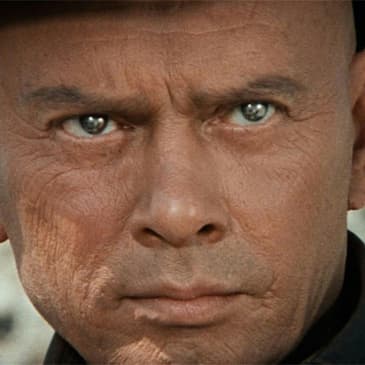

After having covered each and every episode of HBO’s Westworld, David and I finally went back to the source material, Michael Crichton’s original 1973 sci-fi Western thriller. Both David and I saw this movie and were scared by it as kids, and I hadn’t seen it since, so I was curious to see how it would hold up. And I thought it was great! Well worth watching, especially if you enjoy the HBO show.
We are most likely going to be back in a couple weeks to talk about the new documentary, More Than Miyagi: The Pat Morita Story, so we’ll see you then.
Support: patreon.com/jasoncabassi & buymeacoffee.com/cabassi
Email: westworld@podcastica.com
Social: facebook.com/podcastica & twitter.com/podcastica
Subscribe: podcastica.com/podcast/westworld-cast
More great shows: podcastica.com
Advertising Inquiries: https://redcircle.com/brands
Learn more about your ad choices. Visit megaphone.fm/adchoices
[00:00:00] Oh come on, not now, not you again. It's too early. Let me do it this time. Your move.
[00:00:25] I'm shot. What? I'm shot.
[00:00:36] John. Draw.
[00:01:06] Hey everybody, welcome to the podcast. I'm Jason and I'm David and this is House Podcastica Westworld Edition.
[00:01:13] This week, very excited to be covering the original 1973 Westworld movie.
[00:01:19] Yeah, I actually feel like this is way overdue. We should have probably covered this a long time ago.
[00:01:26] It's tremendously overdue and Karen and I were saying, didn't we do this?
[00:01:30] But we didn't. I think it was a Jason and Karen show and we just talked about the movie but we didn't really do the movie.
[00:01:38] Yeah, I mean, you know when the Westworld series was announced for HBO, I was excited because I had seen this movie probably
[00:01:47] when I was seven or eight years old on TV and not since. And I hadn't seen it since until last night.
[00:01:55] So we definitely didn't cover it before. You guys must have talked about it and I talked about my childhood memories,
[00:02:02] but it was really fun to go back and see how much of...
[00:02:08] I barely remembered anything. I just remembered being scared by it and a faceless robot that was really dangerous.
[00:02:15] Yeah, and I know I have told this story for people listening who have listened to Westworld cast,
[00:02:21] but this is the movie in the history of my life that scared me more than any other.
[00:02:27] Wow.
[00:02:28] I thought when it was like...
[00:02:29] I forgot about that.
[00:02:30] Yeah, I was like seven or eight years old and we used to go to spring training every year for a couple weeks in Arizona
[00:02:37] because my dad was covering baseball so we would actually get out of school and go there.
[00:02:42] It was great, but we were staying with some family friends and they let my sister and I watch this movie
[00:02:49] and it scared the crap out of me.
[00:02:52] And I couldn't sleep and was freaking out.
[00:02:57] And I remember my parents were really mad at the family friends.
[00:03:00] They were like, why'd you let them watch this movie?
[00:03:02] Were you mad or were you...
[00:03:05] I don't know if I was mad, but it really freaked me out.
[00:03:09] These kind of things can mess you up as a kid.
[00:03:12] Yeah, big time.
[00:03:13] But here you are, you like the series now so it's interesting how that works sometimes.
[00:03:18] I mean, this movie always stuck with me and it was kind of a cult movie.
[00:03:23] Like I would talk to people about this movie and they're like, what are you talking about?
[00:03:26] And so it really... I enjoyed that it became a thing.
[00:03:29] I happened to see it.
[00:03:31] I remember my stepdad was really into it when we watched it.
[00:03:34] Well, before we get too far in, I should mention for people who like jumped on to this podcast with either Cobra Kai or Mandalorian.
[00:03:40] If you go back just a little bit further in the feed, you'll see that David and I covered season three of the HBO's Westworld series,
[00:03:47] which is the main reason why we're talking about this movie right now.
[00:03:50] And then you can go to our Westworld cast to get the first two seasons of that show.
[00:03:55] We've covered each and every episode of that.
[00:03:58] But let's go back to 1973 and talk about our top five highlights for Westworld.
[00:04:05] Should we say, I guess briefly just... I usually do, you know, in general,
[00:04:10] talk a little bit about whether we liked it or not and whether people should stop listening and go watch it and come back if they don't want to be spoiled.
[00:04:18] So what would you say?
[00:04:19] Yeah, I would say go watch it.
[00:04:21] Clearly.
[00:04:22] So it's... we've found it on HBO Max.
[00:04:26] If you're not a subscriber to HBO Max, On Demand, iTunes, whatever, I think it's inexpensive to watch.
[00:04:33] And yeah.
[00:04:35] And I mean, I probably like it for different reasons now because it's kind of vintage and a little culty.
[00:04:44] It's a little anthropological at this point.
[00:04:47] Right.
[00:04:48] But I think it's still a really good movie.
[00:04:50] Yeah.
[00:04:52] Yeah, me too.
[00:04:53] Like I thought it was really fun to watch and fun to see the roots of it.
[00:04:57] A lot of the things in the HBO Westworld series.
[00:05:00] More than I suspected actually because when I've been watching the HBO when I'm like,
[00:05:05] I think this is pretty much all different.
[00:05:07] But boy, was I wrong because there's a lot that they took from.
[00:05:10] And I did think it held up pretty well in and of itself, especially in the latter half where I was just gripped by it, you know?
[00:05:18] Like, oh, shit.
[00:05:19] But for the first half, I enjoyed it very much.
[00:05:22] But I also do think you kind of need to consider the context of when the movie came out and the fact that like nobody, you know, this concept of this fantasy park with all these robots that would cater to your whims.
[00:05:37] And you got to do whatever you wanted was so, I think so new at that point that that could really just carry the first part of the movie.
[00:05:45] Whereas now I could see people who have watched all through the HBO series and be like, OK, I'm curious and go back and be like, what?
[00:05:53] Because they're not thinking about it from the perspective of someone who's like, wow, this is a crazy idea.
[00:05:58] You know?
[00:05:59] Well, that happens so often in sci-fi, I think compared to other genres where we go back and watch stuff and and we're like, that's cliche.
[00:06:09] But you don't stop to think about that's what invented the cliche and everything else that came from it is derivative.
[00:06:15] Others are on this, too.
[00:06:16] I mean, I think of Citizen Kane that way, which is considered one of the best movies ever.
[00:06:20] But if you go back and watch it, you might be like, what?
[00:06:22] Because you don't realize that it actually invented a lot of the techniques that have just been used in movies ever since.
[00:06:28] You know?
[00:06:29] Yeah, 100%.
[00:06:30] Anyway, let's get into our top five.
[00:06:32] Cool.
[00:06:33] So my number five is 1973 itself, the year that the movie came out.
[00:06:40] That happens to be the year our family moved to California when I was a tiny little kid.
[00:06:46] So that he's ghost.
[00:06:47] Yeah.
[00:06:48] So that year sort of frozen in my memory is just the age of like certain cars and the way things looked and that kind of thing.
[00:06:57] And I think the movie.
[00:06:59] So first thing that comes to mind in this movie is sort of the sci-fi of it, but the movie is also very period.
[00:07:07] It has a certain look like a lot of movies from that era have very bright but flat colors.
[00:07:15] Like it's like a bright color palette, but that's only like seven or eight colors and all the sort of the clothes, the technology is very.
[00:07:25] The big lapels.
[00:07:26] Yeah.
[00:07:27] The bushy hair and the thick mustache.
[00:07:29] Yeah.
[00:07:30] So the people are all seventies and then the technology is kind of this futuristic sort of look with computers with a lot of lights in them.
[00:07:41] Spinning tapes.
[00:07:42] Yeah.
[00:07:43] Yeah.
[00:07:44] Blinky buttons and stuff.
[00:07:45] Yeah.
[00:07:46] So I love it.
[00:07:47] And this movie starts with something they did a lot of in the seventies, which is like a fake news report with a news reporter who has that seventies look and he's interviewing people who just came out of Westworld.
[00:08:02] I happen to love the show Colombo, which is the same era and they do this a lot in Colombo.
[00:08:08] But so he's interviewing a guy who came out of the park and this guy says, I shot six people.
[00:08:14] And then the news reporter says what Mr. Lewis means is he shot six robots.
[00:08:21] So I love that one thing I had never noticed before they get in the elevator.
[00:08:28] So right, they arrive on the hovercraft and then all the people get in the elevator to go to the park.
[00:08:34] And the elevator has four buttons in it.
[00:08:37] Subbasement basement ground level and hovercraft is like, oh, that's very seventies.
[00:08:44] The hovercraft is the top floor.
[00:08:47] And then there, there's also a whole aspect that we would never accept today when everything is so corporate and liability focused.
[00:08:59] Like they're handing these customers guns with real bullets.
[00:09:04] And somehow they have a sensor where they can't shoot a person.
[00:09:08] I feel like using real explosives to blow up brick walls.
[00:09:12] I mean, it's so dangerous.
[00:09:14] Just seems like that would be totally impossible today.
[00:09:17] It's a very seventies ethos.
[00:09:19] I mean, but wouldn't you say the HBO show has the same?
[00:09:23] You need to have suspension of disbelief to get over that?
[00:09:26] Yeah, I think so.
[00:09:28] But in the HBO version, the technology is just so much more advanced.
[00:09:34] It's just more believable.
[00:09:36] I guess so.
[00:09:37] Yeah, I mean, especially when they're talking about how there's an acceptable level of malfunctions that happen all the time and then you've just got this gun that supposedly has the sensor.
[00:09:46] I don't think I would want someone to test it out on me and make sure it worked.
[00:09:50] Yeah.
[00:09:51] Oops.
[00:09:52] Oh, that guy was wearing leather.
[00:09:53] The gun couldn't sound so good.
[00:09:55] It was buzzing.
[00:09:56] There's just so many things that could go wrong.
[00:09:59] I actually didn't realize that that whole interview, the news interviewing people was a standard thing back then.
[00:10:08] And it definitely stuck out.
[00:10:10] I thought it was kind of delightful but also kind of kooky, especially the way they were like, I was the sheriff.
[00:10:17] They're all just happy to go lucky about it.
[00:10:21] It was interesting.
[00:10:22] And the movie starts in a little box, which is meant to be, I guess, the TV screen with the news reporting.
[00:10:29] And I was watching it last night saying, I hope this is not an HBO Max malfunction.
[00:10:35] Like the whole movie's not like this, right?
[00:10:38] But then once the real movie starts, it uses a little screen.
[00:10:41] Letterbox.
[00:10:42] Yeah, and I was thinking about that because I actually didn't.
[00:10:44] I mean, I guess if I would have thought about it, I would have realized that it was a theatrical release originally.
[00:10:49] But I know that I saw it on TV and it was probably square format pan and scan because I think that's how they did everything back then.
[00:11:00] They didn't show Letterbox with the black bars above and below.
[00:11:03] Yeah, totally.
[00:11:04] It was, I'm sure we all saw it pan and scan originally.
[00:11:07] Yeah.
[00:11:08] So as I was watching it Letterbox now, I'm appreciating.
[00:11:12] Oh, I've probably seen this in a better way now than I did back then.
[00:11:16] Yeah.
[00:11:17] I don't know because I was only six and I was probably crying.
[00:11:20] I know I was.
[00:11:23] Okay, my turn.
[00:11:25] Go for it.
[00:11:26] Okay, so mine is the tone.
[00:11:29] And as I'm watching this again for the first time in 45 freaking years or whatever it is, I didn't really remember anything about it except that I was scared and that there was a robot cowboy with his face missing for part of it that scared me the most.
[00:11:46] And so as I'm watching and it did open up with that kind of scene that I thought was kind of cookie.
[00:11:51] And then as it goes along, it really had a vibe like a comedy.
[00:11:56] I felt like it is a comedy when it starts out and it's kind of an adventure to a fantasy.
[00:12:03] I mean, there is the scene where one of them John, I think shoots the gunslinger, aka you'll Brenner in the bar was it.
[00:12:14] And that was pretty intense, especially for a little kid.
[00:12:17] I mean, now we've been desensitized violence has become more graphic, but this is kind of what I'm talking about about needing to think about it from the context of which it came.
[00:12:24] And even though the blood looks super fake, it's still pretty striking to see someone get shot and blood come out for a little kid.
[00:12:31] But aside from that, it really starts out more like these guys are just enjoying themselves and it's there's kind of funny moments and this Richard Benjamin who plays
[00:12:44] Peter. I love Tim. He's kind of got this like smile on his face the whole time and it was infectious.
[00:12:51] And you see Dick Van Patten, who was in eight is enough after that.
[00:12:56] And I mean, for me, I think TV sitcom.
[00:13:00] And then when they get to the you hear the text in the control room go like, All right, let's start that bar fight.
[00:13:09] And then there's this peppy music.
[00:13:12] Wee, somebody knocked someone over the head with a bottle and you hear like a cuckoo sound or something.
[00:13:19] And so but the shift is gradual as things start going wrong and you'll Brenner throughout is pretty intimidating without focused stare of his.
[00:13:30] But when he comes and says the third time and they're like, Oh, come on, not you again.
[00:13:35] And then he kills John right in front of Peter.
[00:13:39] That's when it really I mean, someone had already been killed, but our main characters didn't know that.
[00:13:45] So I felt like it shifted into from comedy to horror.
[00:13:51] And there's even the music really signifies this shift in tone.
[00:13:57] Here's some music from earlier in the movie.
[00:14:04] Just kind of walking down Main Street Street and everything.
[00:14:09] And then here is right after.
[00:14:14] John, the gunslinger killed one of the two guys.
[00:14:19] Gets more menacing.
[00:14:30] Sir, we have no control over the robots at all.
[00:14:35] So I felt like it really shifted and then and then by the end when the gunslinger has been chasing him around relentlessly and especially the part where he's hiding because the gunslinger sees with infrared, I guess, so he's hiding by that flame and he's standing right in front of him.
[00:14:58] But he doesn't know for sure if he's seeing a human there or not.
[00:15:02] Even now I was like, Holy shit, what's going to happen?
[00:15:05] You know, I was really, really gripped by that.
[00:15:07] So it just really grabbed me how the shift from the beginning to the end is so extreme for me anyway.
[00:15:16] And then one last thing I'll say about that is I kept thinking, OK, wait, maybe I misremembered like they did show the gunslinger with his face off in the lab earlier.
[00:15:27] But I thought I remembered a scarier part of that and it was at the very end after he'd been doused with acid and burnt.
[00:15:34] And he came back one last time and looked up and you could see his face was hollowed out.
[00:15:38] And even now, I think because it touched something in me from childhood, I was just like, oh.
[00:15:45] So I like the way I feel like it was kind of brave of a show to almost switch genres.
[00:15:51] It was sort of gradual but still by the from the beginning to the end, it was a big extreme.
[00:15:56] And it makes sense to because the guests have that experience too.
[00:16:00] They think of it as going to be a fun, no consequence time and it ends up being horrific and deadly for them.
[00:16:08] Yeah, I really thought the same thing watching it again this time.
[00:16:13] The other night I had not really noticed before how much of a genre switch there is.
[00:16:19] And you're pointing out the comedic aspects of the first half of the movie.
[00:16:23] That's definitely true. Like Dick Patton is Dick Van Patton is coming early.
[00:16:28] He's trying to be a tough sheriff and he can't get the door open and stuff like that.
[00:16:32] And I mean, I remember him from high anxiety as well as it is enough.
[00:16:37] He's hilarious.
[00:16:38] Is that Mel Brooks?
[00:16:39] Yeah.
[00:16:40] We would take off on Hitchcock movies.
[00:16:43] But yeah, they play a lot of the early movie for comedy and incongruity.
[00:16:50] And and also sci-fi. You think it's a sci-fi movie.
[00:16:53] And then about halfway through, it really switches to a classic horror movie where you're being pursued by this, you know, unstoppable monster.
[00:17:04] And the whole thing shifts to tension.
[00:17:07] Survival mode.
[00:17:08] And fear.
[00:17:09] And there's not a lot of movies like that.
[00:17:11] Yeah.
[00:17:12] Like I think movies today are maybe too scared to do that, you know?
[00:17:16] They follow the same template more or less, especially big blockbuster movies.
[00:17:25] And so when a movie like this comes along, I could see some people going something feels wrong about this, but it's just it's not what we're used to, you know?
[00:17:32] I liked it.
[00:17:33] I thought it was great.
[00:17:34] Yeah.
[00:17:35] And if you think about a movie like Scream, which is a movie I love, it's horror mixed with comedy.
[00:17:44] They play a lot of it for laughs, but it's that way the whole way through the moon.
[00:17:48] Right.
[00:17:49] It doesn't switch.
[00:17:50] Yeah.
[00:17:51] I mean, it is still a brave thing to try because it might just fail.
[00:17:56] And but it succeeded.
[00:17:58] And this is sort of reminding me.
[00:18:00] I don't know if you're watching WandaVision.
[00:18:02] Haven't seen it yet.
[00:18:03] It's interesting.
[00:18:04] I don't want to give away too much, but it's modeled after sitcoms and each episode is a different decade.
[00:18:13] But there's something going on underneath.
[00:18:15] So it really mixes up the genres in a way that if you heard it, like maybe you're hearing me now going, that probably won't work.
[00:18:21] But I think it's pretty great.
[00:18:24] Very cool.
[00:18:25] Anyway, number four.
[00:18:27] All right.
[00:18:28] So my number four is Michael Crichton, who was the writer and director of this film.
[00:18:37] I honestly have to admit, I knew he was sort of a giant of the film and book industry, but never paid that much attention to the details around him.
[00:18:47] So in looking him up about when we were going to talk about this movie, what an amazing guy.
[00:18:54] I mean, so he liked writing and he wanted to be a writer, but he also thought he was going to be a doctor.
[00:19:01] He got a medical degree from Harvard.
[00:19:04] Hated medical school and never ended up practicing.
[00:19:07] He pursued writing instead, but how's that for a throwaway?
[00:19:10] Oh, I got a medical degree from Harvard, but never really wanted to use it.
[00:19:15] I think of him as parallel with John Grisham, who I think he actually was a lawyer, but they decided to screw that actual way.
[00:19:22] Yeah.
[00:19:23] Let me do this.
[00:19:24] Yeah.
[00:19:25] I mean, it's hard work, but it seems more fun.
[00:19:27] But so I mean, the I would say the best known thing he is known for is Jurassic Park, which became a massive film franchise and huge cultural phenomenon that like everyone on Earth knows.
[00:19:41] And I think he wrote the novel but not did he write the screenplay for that?
[00:19:45] Maybe he did.
[00:19:46] I don't know for sure.
[00:19:47] It was at least wrote the novel that the movie was based on.
[00:19:49] I believe it was a collaboration with Steven Spielberg.
[00:19:52] Yeah.
[00:19:53] Okay.
[00:19:55] And I think he did write the first screenplay.
[00:19:58] Not 100% sure.
[00:19:59] Yeah, I think he might have to, but I'm not sure.
[00:20:01] But so, okay, Jurassic Park, The Andromeda Strain, which was a huge bestselling novel and really good movie.
[00:20:09] We should podcast on that one sometime.
[00:20:11] I don't think I've seen that one actually.
[00:20:13] Classic sci-fi kind of in this same got a similar vibe, I would say, to Westworld.
[00:20:19] Scary kind of.
[00:20:21] Yeah.
[00:20:22] And then, right, so there are those two.
[00:20:25] There's Westworld, which was sort of a cult movie but has now become a cultural phenomenon because of the successful TV show.
[00:20:33] Creator of ER.
[00:20:35] I had no idea.
[00:20:37] One of the most successful TV series of all time.
[00:20:41] And so in 1994, Michael Crichton at the same time had created the number one movie, Jurassic Park, ER television show and bestselling book, which was called Disclosure.
[00:21:01] He had all three at the same time.
[00:21:02] I remember that.
[00:21:03] That was a movie too.
[00:21:04] They made it with some movies.
[00:21:06] Yeah.
[00:21:07] I mean, that's just unbelievable.
[00:21:08] Yeah.
[00:21:09] Like how hard is it to create one number one, anything?
[00:21:12] Right.
[00:21:13] And he had all three at the same time.
[00:21:15] He's like the Elon Musk of entertainment.
[00:21:17] Yeah.
[00:21:18] And so I wanted to read up on what gave him the idea for Westworld and here's what he said.
[00:21:26] He said, I think I got the idea for Westworld because I was very interested in astronauts.
[00:21:33] Fascinated by the fact that they were being trained to be machines.
[00:21:37] Then I was also fascinated by the animated figures at Disneyland.
[00:21:41] The two tendencies toward making people as machine, as machine like as possible and machines as human as possible are creating a lot of confusion.
[00:21:52] And that's what suggested Westworld to me.
[00:21:56] And he didn't like the term science fiction.
[00:21:58] He saw these Morris fantasies and he thought that movies more than books or what would sort of inspire the imagination.
[00:22:09] And then as I say, I was kind of blown away by the fact that he created ER, which was this huge TV series in the 90s of a totally different kind of topic.
[00:22:19] But then finding out that he had a medical degree kind of makes sense.
[00:22:23] Yeah.
[00:22:24] And I remember back then I was keyed in to him because I liked Jurassic Park and ER and he came out with this movie Congo, I think in the 90s to that had Bruce Campbell.
[00:22:35] Right.
[00:22:36] Hamming it up.
[00:22:37] And yeah, he really I think he I think he passed away right in like the 2000s or something.
[00:22:43] In 2008 he had cancer so he only lived to be 66 which is too bad.
[00:22:49] I'm sure he would have been still creating.
[00:22:51] Yep, Dongo.
[00:22:52] Yeah.
[00:22:53] And so in Westworld and I'll talk about this in my number three.
[00:22:58] You know, I always thought about him as the author of Westworld and Andromeda Stream but he directed Westworld.
[00:23:04] Right.
[00:23:05] He was a director who directed several films as well.
[00:23:07] Yeah, it's really yeah a lot of time.
[00:23:09] It's interesting because it seemed like he didn't do a lot of directing later on and he wrote still writing those best selling novels which is an interesting trajectory to go down.
[00:23:21] Because I think this movie was well received.
[00:23:24] Yeah, and if you think about Westworld as we've talked about talking about the TV show.
[00:23:30] I mean this it's like a whole realm of even though he didn't like the term science fiction.
[00:23:38] I mean if you think about her and ex machina and you know there's a huge genre of this robot computer human dichotomy.
[00:23:49] Yeah.
[00:23:50] That whole thing about what is science fiction and what is not I know there are some people who are really specific about the definition of science fiction.
[00:24:02] And I didn't you know we could look that up and whatever but there are some people who are just very very particular about what they will and won't call science fiction.
[00:24:09] I mean I think this is definitely a fantasy for sure.
[00:24:12] But with my broad definition of science fiction I would definitely say it was science fiction.
[00:24:17] Yeah I think it's both and touches on both.
[00:24:21] Yeah.
[00:24:22] Okay my number four is about how things go progressively bad and why it happens because even though there is a shift right from the very beginning or very close to the beginning anyway you feel a sense that things are not well.
[00:24:42] And early on in the repair lab there's malfunctioning robots and the technicians report on what went wrong one kept falling over one robot one had central malfunction and he goes another one so that sounds more serious.
[00:24:58] Right.
[00:24:59] And he the guys mentioning how malfunctions are standard but usually minor until about six weeks ago when Roman world had a rise in breakdown rate and we saw a disproportionate rise in central as opposed to peripheral breakdowns despite our corrections the breakdown rate continue to climb.
[00:25:19] Then medieval world began to have trouble now we're seeing more Westworld breakdowns.
[00:25:24] So that was before anything super bad even happened but they're just letting us know I guess that not all as well.
[00:25:33] Then the guns I think it was after that that the gunslinger broke into John's room and his buddy Peter hears him outside and bust in and shoots him.
[00:25:44] I mean also with hindsight I would guess that that wasn't part of any story plan or anything.
[00:25:50] I think he was going there for revenge maybe.
[00:25:53] Yeah it starts to show that he has memory.
[00:25:56] Yeah.
[00:25:57] Like revenge feeling.
[00:25:59] Yeah.
[00:26:00] And I think that's the whole reason why he was so intent on killing Peter at the end because Peter killed him twice.
[00:26:07] Right.
[00:26:08] But the first real like for sure wrong thing I think that we see is when the rattlesnake bites John.
[00:26:15] Right.
[00:26:16] It's not supposed to any bleeding and everything and the snake look like it's lined with tinfoil.
[00:26:21] And then this pretty maiden sex bot Daphne refuses this slimy guy's affections.
[00:26:32] Right.
[00:26:33] My lord Daphne.
[00:26:35] My lord Daphne.
[00:26:37] My lord snap splat.
[00:26:40] Which was played for comedy but it's actually pretty disturbing.
[00:26:44] Right.
[00:26:45] But it's definitely a sign that things are going off the rails.
[00:26:48] Yeah yeah.
[00:26:49] Then then the Black Knight kills that guy who's also a knight stabs him.
[00:26:57] So it's like okay well that obviously this is all fucked and but they're continually trying to talk themselves into keeping it open at least for the guests who are still here.
[00:27:07] And then they shut down the power but they can't the text but then they can't turn it back on and they're locked in and after that and all I think in all three worlds all the robots just start murdering everyone.
[00:27:18] Whoops.
[00:27:19] And the gunslinger kills John and starts chasing Peter around.
[00:27:23] So I mean I probably might have missed a couple of things in there but it went downhill pretty quickly.
[00:27:29] And then I was trying to think why it happened because I don't think it's absolutely clearly 100% stated but there's some pretty big hints.
[00:27:39] One of the Dello scientists mentioned when he mentioned these breakdowns he said there's a clear pattern here with suggests an analogy to an infectious disease process.
[00:27:50] Writing from one area to the next.
[00:27:52] And the other guys like I find it hard to believe in a disease of machinery but he answers but we aren't dealing with ordinary machines here these are highly complicated pieces of equipment.
[00:28:01] Some cases they've been designed by other computers.
[00:28:03] We don't know exactly how they work.
[00:28:05] I think that was in HBO the HBO version two oh we don't really know how they work.
[00:28:10] It definitely was you know there they were talking more about software back in the 70s it's still a little bit more.
[00:28:18] Hardware but definitely that concept of we did they design themselves.
[00:28:22] Right.
[00:28:23] But when you do think of this in terms of software and you're probably right who knows if Michael Crichton even had that in mind but these descriptions sound a lot like modern computer viruses.
[00:28:31] And I read even that the term computer virus some people think it originated here in this movie Westworld.
[00:28:38] And he was a computer expert himself.
[00:28:41] OK right.
[00:28:42] And the thing about that they sometimes have been designed by other computers that's a pretty good description of machine learning which is when computer algorithms improve automatically through experience.
[00:28:59] So they're given a lot of data that's how Tesla cars are supposed to learn how to drive around by themselves and they continually improve because they're taking all the data that comes through the cameras of people's cars who have opted in.
[00:29:11] And to allow that and then use the computer uses that to rewrite its own software.
[00:29:15] It's also in like photo editing apps where a photo can phone can correctly figure out where someone's face is and then make the background behind the face blurry but not the face itself.
[00:29:30] So just taking those concepts into consideration it seems like it's probably that these robots are so complicated that they and they sort of train themselves that they at least some of them got tired of being treated so badly of being killed and raped continually just like the ones in the HBO show.
[00:29:52] And they decided to fight back and then somehow that was transferred to the other robots in this sort of virus like manner.
[00:30:02] That's what I got out of it.
[00:30:04] Yeah, that was something I think the other times I've watched this movie I completely missed that they talk about it being a virus spreading from one park to another.
[00:30:15] Like somehow it went through all the robots and just another note about that sort of how they build the things going wrong and the foreboding of what's about to go wrong.
[00:30:29] The very beginning, like while the guests are coming into the park there's this recording playing that says nothing can go wrong.
[00:30:37] Nothing can go wrong, which has to be a terrible sign.
[00:30:41] Like if you need a recording saying nothing can go wrong, then something can go wrong.
[00:30:47] Yeah, it's all gonna go to hell.
[00:30:49] Yeah.
[00:30:50] A couple others that I thought going along with exactly with your theme.
[00:30:58] One is the very first gunfight in the bar.
[00:31:02] It takes him four shots to kill the gunslinger.
[00:31:05] Like he shoots him in the chest and it doesn't even slow him down really.
[00:31:11] And that's kind of like, you know, whoa.
[00:31:13] Oh, wait a minute. Let me try one more time.
[00:31:15] Yeah, this thing is dangerous.
[00:31:17] And then he's having sex with the prostabot, the prostitute robot and her eyes open up.
[00:31:25] Yeah.
[00:31:26] You know, that was kind of just like, but he doesn't see it.
[00:31:31] Yeah.
[00:31:32] And I mean, that could just mean, well, she only needs to pretend when they can notice.
[00:31:38] But still it was sort of like, oh, this doesn't look like a pleasant experience.
[00:31:42] It was a little disturbing.
[00:31:44] And then and then I do think that the the warning is there when the snake attacks John.
[00:31:52] But the actual moment where the gunslinger kills him, there's like that moment of shock and horror where like the line has been crossed.
[00:32:02] And we're sort of we're out of control.
[00:32:04] And I remember the TV show did that very well.
[00:32:07] And it's effective even though we did already see the night in medieval world stab the other guy because these two guys, John and Peter are the main characters.
[00:32:19] So they're kind of the lens with which we view most of this movie, I feel like, you know.
[00:32:23] And so then to have one of them killed right in front of the other one who doesn't really know that things have gone wrong yet.
[00:32:29] It's yeah, that for me was the moment where the movie was just full on.
[00:32:34] Okay, now we're now I'm a horror movie.
[00:32:36] Right.
[00:32:37] Especially because the killer was right there and Peter had to run away from him.
[00:32:42] Yeah.
[00:32:43] The bill, the sequence of the build to that moment is well done.
[00:32:47] Mm hmm.
[00:32:48] All right.
[00:32:49] My number three is just a few things about the cast.
[00:32:52] We had Yule Brenner as the gunslinger and I think probably his performance actually is crucial to this movie.
[00:33:02] He's so menacing and the way he moves so deliberately and it's still and focused and even kind of he takes glee in the idea that people are scared of him.
[00:33:16] He just really handled that well without having to do much.
[00:33:19] And I think if you'd had another actor in there who didn't nail that role, maybe this movie wouldn't have been so popular.
[00:33:27] I don't know what do you think?
[00:33:29] I think Yule Brenner completely made the movie and it would not have been the same with anyone else.
[00:33:34] I know he's what scared me.
[00:33:36] Yeah.
[00:33:37] Like when I was a kid, it wasn't the story.
[00:33:38] It was him.
[00:33:39] Right.
[00:33:40] I think it's kind of cool.
[00:33:41] Actually, the fact that it was a bit comedic at the beginning and the John character.
[00:33:47] I mean, Peter, he's kind of looking around wide eyed and stuff that really contrasts with Yule Brenner's portrayal of this.
[00:33:55] I mean, he's basically the Terminator.
[00:33:57] So that contrast really made it work well too.
[00:33:59] He's the Terminator before the Terminator.
[00:34:02] And a couple of things I noticed.
[00:34:05] One is that it's just a very small special effect, but the glint in his eyes.
[00:34:09] It looks like they're steel.
[00:34:11] Yeah.
[00:34:12] His pupils.
[00:34:13] Yeah, it's pretty effective.
[00:34:14] And he had this way of walking in the movie, like somehow walking like a robot.
[00:34:22] He kind of walks only with his legs.
[00:34:24] Like his upper body is very still.
[00:34:26] And the glides.
[00:34:27] Yeah.
[00:34:28] But it looks unnatural in a way.
[00:34:31] And then he's got a great voice and a great theme sound, you know, that little shuddery sound effect.
[00:34:38] Yeah.
[00:34:39] It's just, I think it makes the whole movie.
[00:34:43] Yeah.
[00:34:44] And so we had Richard Benjamin as Peter and I already mentioned I liked his continually in wonderment until he had to survive and kind of be the hero of the movie, which was cool to put that guy in that spot.
[00:35:02] We had James Brolin who is very 70s.
[00:35:07] Yeah.
[00:35:08] And I know I saw him on hotel.
[00:35:10] I know he's been in a ton of movies.
[00:35:12] I don't know if I've seen him in much, but his son is Josh Brolin who's Thanos.
[00:35:16] Great.
[00:35:17] Yeah, he's great too.
[00:35:19] Yeah.
[00:35:20] And W and all those movies.
[00:35:21] Goonies.
[00:35:22] Dick Van Patten we talked about.
[00:35:24] He seemed like he was formerly a kind of pudgy, nerdy kid who's now getting to play tough.
[00:35:31] We had Daphne who was played by a Playboy playmate.
[00:35:37] Playboy is May 1967 playmate of the month and Randolph and IMDB says the guy who played the night that Daphne refused the guest.
[00:35:46] He's Norman Bartolt.
[00:35:48] He was 45 years old at the time.
[00:35:51] I'm like, wow, that's like five years younger than me and he looks so old.
[00:35:55] He does.
[00:35:58] He does.
[00:35:59] People looked older back then.
[00:36:00] And then the last one I wanted to mention is Majel Barrett who plays the madam.
[00:36:05] Never realized that until last night looking at him.
[00:36:09] I'm like, she looks familiar and I looked her up.
[00:36:11] Oh yeah.
[00:36:12] She's only got like two lines but yeah, how about that?
[00:36:16] The voice of the computer in Star Trek.
[00:36:18] In Star Trek.
[00:36:19] And Deanna Troy's mother in Next Generation and of course.
[00:36:23] And the nurse in the original Star Trek.
[00:36:25] And Star Trek creator Gene Roddenberry's wife.
[00:36:28] Yeah.
[00:36:29] Very cool.
[00:36:30] Any other ones I missed that I should have talked about?
[00:36:34] Nope, I don't think so.
[00:36:35] Yeah.
[00:36:36] Pretty simple movie which I like sometimes.
[00:36:38] Yeah.
[00:36:39] It's not a big cast.
[00:36:40] I mean there's not that many people in it.
[00:36:43] Okay.
[00:36:44] Number two.
[00:36:45] Okay.
[00:36:46] So just one more thing before we leave the gunslinger.
[00:36:51] One of the things I loved with him and his character was that they.
[00:36:57] While Peter is running away, he runs across this like repairman
[00:37:02] out in the desert who's trying to repair a flat tire on his golf
[00:37:06] cart.
[00:37:07] Which is another concept that got updated later in the TV show.
[00:37:11] Yeah.
[00:37:12] Way more effectively with those ATVs.
[00:37:15] Yeah.
[00:37:16] But he.
[00:37:17] There's this little speech about the gunslinger where he's like
[00:37:20] must be a model 404, maybe a 406 beautiful machine.
[00:37:24] Whatever you do.
[00:37:25] He's always one jump ahead of you.
[00:37:27] You haven't got a chance.
[00:37:29] It just cracked me up.
[00:37:31] I mean.
[00:37:32] And seeing him in that white jacket saying that shit.
[00:37:34] I was like, I bet you he's going to have some red on that real soon.
[00:37:38] And it was like 30 seconds late.
[00:37:41] But the.
[00:37:42] I would say the gunslinger is the model for the Terminator
[00:37:46] certainly.
[00:37:47] But also there's a lot of the predator in the gunslinger.
[00:37:51] And kind of that whole pixelated view is reminiscent of predator.
[00:37:56] Yeah.
[00:37:57] Just a hunter being a hunter and a little bit of the same concept
[00:38:00] like he's hunting shorts and egg are in the latter half of predator.
[00:38:03] Mm hmm.
[00:38:04] So that pixelated view, by the way, it seemed a little silly to
[00:38:09] me because it seemed to like wow, they their vision is that
[00:38:14] shitty.
[00:38:15] That makes him seem really ineffective.
[00:38:17] But it was central to the plot.
[00:38:19] So they had to have it.
[00:38:21] OK, so this actually is my number two.
[00:38:24] OK.
[00:38:25] And again, really didn't certainly didn't know this when first seeing
[00:38:29] the movie.
[00:38:31] This really is a historic film because this is the first movie
[00:38:37] with CGI computer generated imagery.
[00:38:41] And the computer generated imagery is the robot's perspective.
[00:38:47] It's the pixelated view.
[00:38:49] Cool.
[00:38:50] So the first movie to use computer generated images to create a
[00:38:54] special effect.
[00:38:55] And I mean, this is only a few years before Star Wars and this
[00:38:59] all becomes very, you know, George Lucas takes it to another
[00:39:03] level on that takes off.
[00:39:05] Makes everyone else look bad.
[00:39:07] Right.
[00:39:08] Exactly.
[00:39:09] But so the director of photography, Gene Polito said they
[00:39:15] set out to create how are we going to make the gunslinger's
[00:39:18] vision look different like a robot?
[00:39:22] And the the DP said we they ended up having Richard Benjamin made
[00:39:28] up completely in white to be able to shoot this.
[00:39:32] And then they were going to process the imagery through
[00:39:35] computers.
[00:39:36] So like white makeup, a white Western wardrobe, white gloves,
[00:39:40] white hairspray looked like as though he'd fallen into a
[00:39:43] barrel of flour.
[00:39:45] But that's the contrast they needed to make this work in that
[00:39:49] sequence.
[00:39:51] And then this was this was Crichton's big idea.
[00:39:54] He was into computers and you know, he had this concept, but
[00:39:58] he couldn't get anyone to do it like to process the image
[00:40:03] through a computer and then translate it to film.
[00:40:07] He talked to all these different people and they like they're
[00:40:09] like what are you talking about?
[00:40:11] Finally, Jet Propulsion Laboratory offered they understood it
[00:40:16] and they were like OK, we'll do it for you.
[00:40:18] But they offered to do it for $200,000 and it was going to
[00:40:22] take nine months and the whole film only cost a million
[00:40:25] dollars.
[00:40:26] It really was a low budget film.
[00:40:28] Basically in today's dollars one episode of the Westworld TV
[00:40:32] show was equal to like the budget for this whole movie.
[00:40:35] Oh.
[00:40:37] Finally, they found this guy John Whitney Jr.
[00:40:40] and he agreed to do it for 20 grand and it took him four
[00:40:43] months.
[00:40:44] And if you add up all the pixelated effect in the movie,
[00:40:49] it's only about two minutes of film.
[00:40:52] They also by the way only had about 75 grand for set
[00:40:56] construction, which is like nothing.
[00:40:59] So all these sets look so stark and simple.
[00:41:03] Right.
[00:41:04] And they ended up looking really cool, but it's the reason is
[00:41:07] they didn't have any.
[00:41:08] Yeah.
[00:41:09] And that's one of the things that you can really see how they
[00:41:11] brought forward and modernized for the HBO series, which
[00:41:14] surprised me.
[00:41:15] I didn't realize that was taken from the movie instead of
[00:41:20] Stark Bear White Walls.
[00:41:22] It's like glass, but it's similar in the lab space.
[00:41:25] You can see how it evolved into what came in the HBO
[00:41:29] series and everything.
[00:41:30] Yeah.
[00:41:31] And there's a whole homage in the early in the HBO series.
[00:41:34] I don't remember exactly which episode, but where there's
[00:41:37] sort of a chase through these Stark Hallways and you see
[00:41:41] a Yolb runner like Gunslinger robot and they use the
[00:41:44] sound effect and all that stuff.
[00:41:47] But I mean, first CGI in a movie, that's that's
[00:41:50] historic.
[00:41:51] So I think that takes this movie kind of to a
[00:41:54] different level.
[00:41:55] That's probably another thing that in its time had a
[00:42:01] much different impact.
[00:42:02] Like I just said, oh, that shitty pixelated view is
[00:42:05] what they had.
[00:42:06] And I mean, there is a practical aspect to what I'm
[00:42:09] saying.
[00:42:10] Like, well, if he can't see very well, how effective are
[00:42:13] they at all the things they need to do in the
[00:42:15] park?
[00:42:16] So maybe there's some suspension of disbelief there,
[00:42:18] but also maybe there's a little bit of, wow,
[00:42:20] pixelation is crappy.
[00:42:21] But back then it was like, whoa, what am I seeing
[00:42:23] here?
[00:42:24] Yeah.
[00:42:25] And remember also they make a point of his hearing
[00:42:28] being enhanced.
[00:42:29] So you get the idea that a lot of what they do maybe
[00:42:32] is from sound and infrared to which right.
[00:42:36] Peter was able to use that flame as camouflage
[00:42:39] basically.
[00:42:40] I did think it was funny that the technician, he
[00:42:44] was like, how can I beat this thing?
[00:42:46] And the technician was like, I don't know, maybe
[00:42:48] acid in the vision system.
[00:42:50] And then he's walking through the lab and it's
[00:42:52] like, hey, five jars of acid.
[00:42:54] What do you know?
[00:42:55] Like they're just randomly sitting on a table
[00:42:58] there.
[00:42:59] Got to have some breaks occasionally.
[00:43:01] Yeah.
[00:43:02] Your way.
[00:43:03] OK, minor two is some behind the scenes stuff.
[00:43:06] We talked a bit about Michael Crichton already.
[00:43:08] I had thought that this was also based on a
[00:43:11] novel by him, but no, it's an original
[00:43:13] screenplay.
[00:43:14] And Wikipedia said that after making the
[00:43:18] movie, Crichton took a year off.
[00:43:21] Quote, I was intensely fatigued by Westworld.
[00:43:24] I was pleased but intimidated by the audience
[00:43:27] reaction.
[00:43:28] The laughs are in the wrong places.
[00:43:30] There was extreme tension where I hadn't
[00:43:32] planned it.
[00:43:33] I felt the reaction and maybe the picture was
[00:43:35] out of control.
[00:43:36] He believed the film had been misunderstood as a
[00:43:38] warning of the dangers of technology.
[00:43:40] Quote, everyone remembers the scene in Westworld
[00:43:42] where a yield brinner is a robot that runs
[00:43:44] a muck.
[00:43:45] But there is a very specific scene where people
[00:43:47] discuss whether or not to shut down the resort.
[00:43:49] I think the movie was as much about that decision
[00:43:51] as anything.
[00:43:52] They just didn't really think it was really going
[00:43:54] to happen.
[00:43:55] So I think his real intention was to
[00:43:58] warn against corporate greed, which is
[00:44:01] something they definitely followed up with
[00:44:04] in the HBO series, making it as much about
[00:44:07] like the folly of man as it is about technology.
[00:44:09] And this sequel Future World, which is a
[00:44:12] much less good movie, but is explicitly
[00:44:16] about that.
[00:44:17] About that stuff.
[00:44:18] Yeah.
[00:44:19] So they took the reins on like that's what the
[00:44:23] HBO show, I mean my number one is going to be
[00:44:26] about comparisons to the HBO series.
[00:44:28] As is mine.
[00:44:29] As is yours.
[00:44:30] But you know, they really took some things
[00:44:33] that were just touched on here and very much
[00:44:36] deepened and expanded them in really smart
[00:44:38] ways, I think.
[00:44:39] Watching this makes me miss the HBO series
[00:44:43] and appreciate it more, which I'm glad to be
[00:44:46] feeling that way about it.
[00:44:48] Great.
[00:44:49] It's let's see, you know, at the end when
[00:44:52] the gunslinger was really hunting down Peter,
[00:44:56] I'm like, wow, this really seems like the
[00:44:59] Terminator has a Terminator vibe.
[00:45:01] I bet James Cameron was a fan of Westworld.
[00:45:03] So I looked it up and found this article
[00:45:05] saying that he's a huge fan of Westworld,
[00:45:07] that the portrayal of the robots in the
[00:45:10] Terminator, I mean in Westworld inspired his
[00:45:13] depiction of robots or cyborgs in the Terminator
[00:45:16] films.
[00:45:17] In fact, he had Arnold Schwarzenegger watch
[00:45:19] Westworld before filming the Terminator told him
[00:45:22] to model his performance on Yule Brenner,
[00:45:24] his emotionless detachment and laser like
[00:45:27] focus on whatever task he was doing.
[00:45:30] So I'm like, yeah, that makes sense.
[00:45:32] And now as we're talking about it,
[00:45:33] talking about with you, the whole thing
[00:45:35] about Model 404, that's like the Model T
[00:45:39] 800 or whatever he was.
[00:45:41] Cyberdyne Systems Model 101.
[00:45:44] And the robot vision, they used that too.
[00:45:48] So and even the music, which I'm going to play
[00:45:51] that fluttery thing later, but maybe he
[00:45:54] was inspired by that because the whole
[00:45:56] Terminator is kind of similar in its
[00:45:59] vibe anyway to that.
[00:46:01] I mean, the Terminator itself,
[00:46:04] another groundbreaking iconic movie.
[00:46:07] Yeah.
[00:46:08] And a pretty low budget movie,
[00:46:11] unlike the sequels that followed.
[00:46:14] But the more you're talking about it,
[00:46:16] the more I'm like, you know, he kind of just
[00:46:18] copied it from Westworld.
[00:46:19] I know, I know.
[00:46:20] But it's so good though.
[00:46:22] I mean, yeah, he just copied it
[00:46:25] and amped it up and skipped right to the
[00:46:27] scary part.
[00:46:28] No comedy part in the beginning.
[00:46:30] Right.
[00:46:31] Although they play Terminator for comedy
[00:46:33] if you do.
[00:46:34] They do a little bit.
[00:46:35] That movie scared me as a kid too.
[00:46:37] Yeah.
[00:46:38] Which one do you like better now after
[00:46:40] all this time has passed?
[00:46:42] I mean, I have a lot of affection for
[00:46:45] Westworld.
[00:46:46] But I mean, no, I'm sorry.
[00:46:48] I'm talking about the first two Terminator
[00:46:50] movies or any of the Terminator movies.
[00:46:52] I mean, the Terminator 2 is much
[00:46:56] more sophisticated movies than
[00:46:58] Terminator 1.
[00:46:59] Much better special effects,
[00:47:02] higher budget, all that stuff.
[00:47:04] But I think Terminator the first one
[00:47:08] or as cheesy as some of the effects are
[00:47:11] and as limited as it is in certain ways
[00:47:13] is more authentic.
[00:47:17] I still love the first one the best.
[00:47:19] I think I do too.
[00:47:20] I'd have to go back and watch
[00:47:22] but just more powerful and focused.
[00:47:26] I mean, 2 is great.
[00:47:27] But I feel the same way.
[00:47:29] 2 is great.
[00:47:30] They're both great.
[00:47:31] I feel pretty similarly about the
[00:47:33] Alien movies.
[00:47:34] Aliens was great and bigger
[00:47:37] and more actiony just like Terminator 2 was.
[00:47:41] But the first one was just so focused
[00:47:43] and scary and tense.
[00:47:46] Yeah, I can't share that feeling
[00:47:50] for the Alien movies,
[00:47:52] which I also love only the first two
[00:47:55] of the rest of them are terrible.
[00:47:57] But Covenant was OK.
[00:48:02] But I saw the second one first.
[00:48:06] So I loved Aliens.
[00:48:09] Like Westworld scared the shit out of me.
[00:48:12] But so by the time I saw the original Alien,
[00:48:15] I knew what it was already.
[00:48:18] So I lost kind of a suspense.
[00:48:20] So that might have taken away some of the impact.
[00:48:22] It's still a great movie.
[00:48:23] It is.
[00:48:24] I mean, I'm just realizing
[00:48:25] so I saw Westworld on TV.
[00:48:27] It scared me.
[00:48:28] The first movie I ever saw in the theater
[00:48:30] was Jaws, which scared the crap out of me
[00:48:32] at six years old.
[00:48:33] I saw Alien at the drive-in.
[00:48:35] My mother, man.
[00:48:36] What was she thinking?
[00:48:38] But now I love all this stuff.
[00:48:40] It explains a lot.
[00:48:41] Yes, it's fine.
[00:48:42] Yeah, it's hard for life, but it's good.
[00:48:44] Wouldn't want it any other way.
[00:48:46] OK, what is your...
[00:48:47] Oh, one more thing about behind the scenes.
[00:48:50] Actually just a couple quick ones.
[00:48:52] Arnold Schwarzenegger was in talks to Star
[00:48:54] in a remake of Westworld in 2007
[00:48:56] before the deal fell apart.
[00:48:57] I'm kind of glad he didn't.
[00:48:58] Really?
[00:48:59] Interesting.
[00:49:00] Yeah, maybe it would have been good.
[00:49:02] It just would have been Terminator again.
[00:49:04] Yeah, exactly.
[00:49:05] And then Quentin Tarantino almost did a remake,
[00:49:08] which could have been interesting.
[00:49:10] Maybe they would have Tarantino that went up too much.
[00:49:13] And last, Yieldbrinner wore the same outfit in Westworld
[00:49:16] as he did in the Magnificent 7.
[00:49:19] Oh, no kidding.
[00:49:20] So they had to really control the budgets back then, I guess.
[00:49:23] So, OK, this is our...
[00:49:28] We'll call it a combined number one because we both did the same thing.
[00:49:32] But parallels and connections to the TV series.
[00:49:37] So TV show, right?
[00:49:41] It's more than 40 years later.
[00:49:42] It's incomparably more sophisticated.
[00:49:46] A much higher budget.
[00:49:48] You know, as we said, basically it's the budget.
[00:49:51] They had the budget per episode that Michael Houghton did for the whole movie.
[00:49:56] Lavishly produced.
[00:49:58] Yeah.
[00:49:59] But I would say that they really stuck pretty faithfully to the themes.
[00:50:06] They very much expanded them.
[00:50:08] It's more complex.
[00:50:10] But you realize how much is in the movie that basically season one of the TV show
[00:50:17] is the movie expanded to five times the length.
[00:50:21] And all those themes hold up.
[00:50:25] The characters, I think, are interesting because there's some parallels,
[00:50:31] but they sort of took some in a different direction.
[00:50:35] I mean, really the gunslinger who equals the man in black,
[00:50:42] old William and Richard Benjamin, who is essentially young William,
[00:50:48] is the same character in Westworld, the TV show.
[00:50:52] But it's like the two main characters in the movie became in the show the same person.
[00:50:58] The young helpful antagonist.
[00:51:00] I mean, I also thought the gunslinger,
[00:51:03] aka Yule Brenner was a lot of Dolores to just the main host slash robot
[00:51:10] that wants revenge.
[00:51:12] Yeah, and that I agree.
[00:51:14] I think that crosses over because I mean, Dolores in the movie Westworld
[00:51:20] is essentially Daphne like the sex bond.
[00:51:22] Yeah.
[00:51:23] That's what she starts out as.
[00:51:25] Right.
[00:51:26] And then she sort of becomes Yule Brenner.
[00:51:28] Yeah.
[00:51:29] Which is great.
[00:51:31] Exactly.
[00:51:32] There's a moment in at the very beginning of Westworld,
[00:51:37] the movie in the TV reporter scene where he's interviewing somebody that was
[00:51:43] in I guess medieval world.
[00:51:45] And the guy says, I married a beautiful princess.
[00:51:48] And the reporter says, is that something you always dreamed of doing?
[00:51:52] And I immediately thought of Dolores.
[00:51:55] Like that may not turn out so well for you or you're lucky you got out of the
[00:52:01] way, but they also used some of those the sayings that are like the marketing
[00:52:06] slogans from the movie.
[00:52:07] Boy, we got a vacation for you and Delos the vacation of the future
[00:52:12] today and how those sort of get perverted in the TV show.
[00:52:17] I mean, I was trying to find Delos slogans from the TV show.
[00:52:21] I only found leave your world behind live without limits,
[00:52:24] which is similar.
[00:52:27] Right.
[00:52:28] I like boy, have we got a vacation for you.
[00:52:31] So Miss Carrie, the major Barrett, the mountain turns into Maeve in the TV
[00:52:37] show.
[00:52:38] And I think that was one of the most successful adaptations where they
[00:52:42] took that bit character and blew it up into something that was very major
[00:52:46] important.
[00:52:47] Yeah.
[00:52:48] But I would say really season one of Westworld basically equals to the
[00:52:52] movie.
[00:52:53] And what you get is more of the reasoning and backstory of the
[00:52:58] reasoning and backstory and complication behind it.
[00:53:02] The one thing that doesn't really exist in the movie is Dr.
[00:53:06] Robert Ford.
[00:53:07] Yeah, there's one scientist who seems to know more than the others.
[00:53:11] But yeah, and the character name is cheap supervisor in the film.
[00:53:17] OK.
[00:53:18] And that's the closest thing.
[00:53:19] But yeah, really, you don't get the idea that he's the creator.
[00:53:23] No, right?
[00:53:24] That there's a corporate creator somewhere.
[00:53:26] He's just the one operating it.
[00:53:28] Yeah.
[00:53:29] Yeah, there's no real Ford character and for that character added so much to
[00:53:34] the HBO series.
[00:53:36] So that was a good addition that HBO did.
[00:53:40] Jonathan Nolan, Lisa Joy did.
[00:53:43] OK.
[00:53:45] Some practical similarities right from the start.
[00:53:49] We learn about medieval world, Roman world and Westworld, the three
[00:53:53] parks on the show.
[00:53:54] We have Westworld, Shogun World, War World, the Raj, which is the
[00:53:58] Indian colonization imperialistic world.
[00:54:03] There's like a fantasy version of medieval Europe, which some people
[00:54:09] think is fantasy world, but I don't think that's been confirmed.
[00:54:14] We know it's fantasy because we saw the Game of Thrones dragons
[00:54:17] with Ben Offenweiss repairing them.
[00:54:21] Remind me, do we get any of the other worlds in season one of Westworld?
[00:54:25] I don't think we do.
[00:54:28] Or is that start?
[00:54:30] I think maybe we saw some Shogun World stuff in the last episode.
[00:54:34] Gotcha.
[00:54:35] Oh, that's right.
[00:54:37] That's right in the lab.
[00:54:39] Yeah.
[00:54:41] And then there's also some unnamed park that's like an American
[00:54:45] suburb for hire that we saw in the most recent season.
[00:54:50] So five or six parks instead of three cost $1,000 a day instead
[00:54:55] of $40,000 a day.
[00:55:00] The scene after the bank robbery, remember they heard a lot of
[00:55:03] gunfire outside and they decided to go upstairs with their
[00:55:06] escorts instead.
[00:55:09] Then they go out and they see dead bodies all over the road.
[00:55:12] That looked just like the aftermath of when Dolores killed
[00:55:16] everyone.
[00:55:17] I don't know if that was on purpose or not.
[00:55:19] That reminded me of it.
[00:55:21] Yeah, I think there's an amazing number of scenes that Westworld
[00:55:24] the TV show replicated.
[00:55:26] Yeah.
[00:55:27] At least in some point that definitely I had the same
[00:55:30] impression from that.
[00:55:32] The bank robbery is like the whole robbery with Hector,
[00:55:37] I think.
[00:55:38] Yeah.
[00:55:39] Even though we never get to see it in the movie but we
[00:55:41] know what's going on.
[00:55:43] And then to me, like the gunslinger pursuing him out into
[00:55:47] the wild was like that whole thing from season one of Westworld
[00:55:51] where young William and Dolores and they were out in the
[00:55:55] wild.
[00:55:56] Remember there was a storyline with the sheriff and then it
[00:56:00] all starts to go wrong.
[00:56:02] A lot of the first season of Westworld sort of entails
[00:56:07] that whole scene.
[00:56:09] Just fleshing it out so to speak.
[00:56:11] And then there's some bar room parallels.
[00:56:14] There's some Bordello parallels.
[00:56:17] There's a lot of parallel scenes.
[00:56:20] And just seeing all the techs in their lab coats and like
[00:56:25] piling up bodies and opening and all in this big room
[00:56:29] where there's different tables for each one,
[00:56:31] they kind of replicated that.
[00:56:33] And it's really I mean when I saw that in the show,
[00:56:37] it just seemed so strange.
[00:56:39] Like how did they come to this design and now watching the
[00:56:42] movie I'm like, oh, now I know how.
[00:56:44] Yeah.
[00:56:45] The dumb golf carts got replaced.
[00:56:49] That was good with ATVs because that harsh terrain.
[00:56:53] I didn't really believe that golf cart would be going
[00:56:55] very far.
[00:56:56] No, well or you could understand why you had a flat tire.
[00:56:59] Yeah, yeah, exactly.
[00:57:01] They have a repair period at night.
[00:57:03] I mean one thing I was wondering they bring vehicles
[00:57:07] out at night to clean up all the bodies and stuff.
[00:57:10] And it seems like in the show wouldn't they wait to do that
[00:57:14] until like the guests would all go home and there was a period
[00:57:19] in between before the new guests would come in or how did
[00:57:21] they do that because you would think that in a world like this
[00:57:24] you'd have people out at night having adventures and stuff.
[00:57:27] Yeah, I wondered that too.
[00:57:29] That was a little suspension of disbelief.
[00:57:31] They just assume all the guests are asleep or maybe
[00:57:34] they figure, hey, if they see it, they see it.
[00:57:36] No big deal.
[00:57:37] Yeah, yeah.
[00:57:38] HBO.
[00:57:39] The HBO show didn't have a thing where you can tell a robot
[00:57:41] by its hands, which I think was smart to get rid of because
[00:57:45] you don't want an easy way to be able to tell who's real
[00:57:47] and who's not.
[00:57:48] Yeah, I mean, and I thought that was a little silly.
[00:57:50] Yeah.
[00:57:51] Like they could have these robots that are perfect in
[00:57:53] every other way, but the hands look obviously fake.
[00:57:56] They just can't figure it out.
[00:57:57] Just kind of silly.
[00:57:59] We talked a lot about the look, but the robots
[00:58:02] insides look more like the insides of the old mechanical
[00:58:06] models on the TV show, which I think was on purpose where
[00:58:09] that was sort of an homage to these ones.
[00:58:11] But the newer ones have these whole 3D printed
[00:58:14] organic like structure.
[00:58:17] The music now I played some of the like more happy go
[00:58:23] lucky music.
[00:58:24] I feel like maybe they took some cues from that to make
[00:58:27] the music of the HBO series, Roman Joati.
[00:58:33] But here it is again, just a little piece.
[00:58:39] And here's the sweetwater.
[00:58:46] Actually, maybe I picked the wrong piece of music there.
[00:58:56] I think those are fairly parallel.
[00:59:00] Kind of, yeah.
[00:59:01] And then it's kind of plucky, I guess.
[00:59:04] But it's the second one is a little darker, maybe or a
[00:59:08] little more nuanced.
[00:59:10] Totally.
[00:59:11] It's a little more foreboding.
[00:59:12] Yeah.
[00:59:13] Movie version.
[00:59:14] And then later though in the movie, the 73 movie, there's
[00:59:19] some scary music that I feel like is another version of
[00:59:23] this.
[00:59:29] The piano.
[00:59:32] I feel like, I don't know.
[00:59:35] They just decided to use piano.
[00:59:37] But I think I guessing that Roman Joati listened to all
[00:59:43] this music and let it inspire him in making the HBO
[00:59:47] music.
[00:59:48] Yeah.
[00:59:49] And I mean, Joy Nolan, they had a lot of love you can
[00:59:52] tell for the original movie.
[00:59:54] So I think that it did infuse everything they did in
[00:59:59] the TV show to bring some of those elements into it.
[01:00:02] Which is good.
[01:00:03] Like I said, this watching this just makes me
[01:00:06] appreciate the HBO show even more.
[01:00:08] I feel like I want to go back and watch season one now.
[01:00:11] I know.
[01:00:12] After watching the movie again.
[01:00:13] Okay.
[01:00:14] And then there's the music that you and I have both
[01:00:17] been talking about that's like the gunslinger slash
[01:00:20] Yule Brenner theme music, which is just so effective
[01:00:31] because it's so weird.
[01:00:33] It's like nothing we've heard before.
[01:00:35] I mean, think about almost any TV show or movie you
[01:00:38] love the music is such a big part of it.
[01:00:41] Yes.
[01:00:42] Lost always comes to mind.
[01:00:43] Yeah.
[01:00:44] Anything that works well usually had some pretty
[01:00:46] effective music behind it.
[01:00:48] Yeah.
[01:00:49] And often it's unique, you know, because if it's
[01:00:54] just generic then it's not really going to get
[01:00:56] you.
[01:00:57] And so as you mentioned, they had a scene in like
[01:01:00] an homage to that in the HBO West World.
[01:01:03] It showed Yule Brenner in the backgrounds, like
[01:01:06] deactivated.
[01:01:07] Yeah.
[01:01:08] They have to go back and watch that now.
[01:01:10] I didn't have time to do it before this, but somehow
[01:01:14] there is a suspenseful scene that takes place in
[01:01:18] the tunnels like where the labs are.
[01:01:21] And they use that sound effect.
[01:01:23] And there is a Yule Brenner looking model post.
[01:01:28] Right.
[01:01:29] It is standing, standing in one of the rooms.
[01:01:32] And here's the music they played during that on the
[01:01:34] new HBO show.
[01:01:35] Yeah.
[01:01:43] I mean, it's just a direct lift.
[01:01:46] So maybe a little more in the background, but not
[01:01:49] much.
[01:01:50] Yeah.
[01:01:51] Let's see the characters when we first saw Peter
[01:01:55] and John on the like transport heading over.
[01:01:58] I of course thought of young William and Logan.
[01:02:01] Right.
[01:02:02] And they're kind of similar in that like Logan, John
[01:02:05] has been to the park before and he's sort of
[01:02:07] introducing this other guy, Peter or young
[01:02:10] William to the park.
[01:02:11] Yeah.
[01:02:12] And I think John and Logan are both hedonists
[01:02:15] that have a cynical approach to being in this
[01:02:18] park.
[01:02:19] Yeah.
[01:02:20] But John seemed a little less, I don't know,
[01:02:24] like a creep to me than Logan does.
[01:02:27] What do you think?
[01:02:28] Yeah, I agree with that.
[01:02:30] It's a simpler character.
[01:02:31] Like we never really get to know him at all.
[01:02:34] Yeah.
[01:02:35] And both of these characters are pretty thinly drawn
[01:02:37] compared to the HBO show.
[01:02:39] Very much so.
[01:02:40] We get a little with Peter.
[01:02:41] Oh, he's divorced and this.
[01:02:43] Yeah.
[01:02:44] That's right.
[01:02:46] And the themes too.
[01:02:47] I mean, you mentioned themes.
[01:02:50] Leaving your troubles behind in this fantasy
[01:02:52] world is like the big theme.
[01:02:54] But the theme about the nature of reality
[01:02:57] and what makes a conscious being and whether
[01:03:00] what matters and doesn't matter when you're
[01:03:03] considering, you know, what is real.
[01:03:06] And just a quick interaction with the first
[01:03:10] female.
[01:03:12] Well, this woman that comes up and introduces
[01:03:15] them to the park, Peter says was she a
[01:03:17] and John's like probably in the TV show.
[01:03:20] That's to Lula Riley coming on to young
[01:03:23] William.
[01:03:24] And if you can't tell, does it matter?
[01:03:26] Right.
[01:03:28] But then later after Peter breaks out of jail
[01:03:32] and kills the sheriff and he's all excited
[01:03:34] about it, he goes, you know what?
[01:03:35] I almost believe all this.
[01:03:36] Well, why shouldn't you believe it?
[01:03:38] It's as real as anything else.
[01:03:39] Yep, I reckon.
[01:03:40] But they really don't go into it that deeply though.
[01:03:44] You know, it's not really about it's
[01:03:47] not so much about the nature of what is
[01:03:50] real and in what matters.
[01:03:52] I mean, another thing that's really linked
[01:03:54] to that is that's a theme in the HBO show
[01:03:57] is whether you should or just the perspective
[01:04:02] of these robots and what they're going
[01:04:05] through and whether you need to sympathize
[01:04:07] with them.
[01:04:08] And I wonder like when people are watching
[01:04:11] through watching this movie back in 1973
[01:04:14] was it their reaction to sympathize with
[01:04:17] these robots?
[01:04:18] Because now from the perspective of having
[01:04:20] watched Westworld, it's really natural
[01:04:23] to think, oh, yeah, I understand why they rose up.
[01:04:26] I guess when you watch the movie the first time,
[01:04:28] do you think you still had that reaction to
[01:04:30] because they're kind of presented as the antagonist
[01:04:32] here, I would say.
[01:04:33] I don't think so.
[01:04:34] I don't think that complexity and sympathy
[01:04:38] for the robots is really present in the movie.
[01:04:42] It's more two dimensional instead of three dimensional.
[01:04:45] I think that was brilliantly created
[01:04:47] for the show.
[01:04:49] Yeah, this sort of moral ambiguity
[01:04:52] and which side should you be on?
[01:04:55] The humans are kind of assholes
[01:04:57] and the hosts are more sympathetic.
[01:05:01] We don't see things from the perspective
[01:05:04] of the robots at all in this movie
[01:05:08] and we don't see how this,
[01:05:11] what the texts are considering a virus
[01:05:14] that spread through the parks,
[01:05:16] was that just some kind of a software thing
[01:05:18] or did they actually talk to each other?
[01:05:20] I think the intention is not for us
[01:05:22] to take on their perspective,
[01:05:24] but still I wouldn't be surprised
[01:05:26] if some people watching this were like,
[01:05:28] well, yeah, I kind of don't blame them
[01:05:30] because they're just being killed every day.
[01:05:32] Yeah, that was definitely something
[01:05:34] that was way, way, way more present in the HBO show
[01:05:37] and may not have been present at all
[01:05:39] in the original movie.
[01:05:41] I guess that's about all I had.
[01:05:43] Do you have any notes or anything else?
[01:05:45] Just two small notes,
[01:05:47] I've talked about most of them.
[01:05:49] One is as much as I love the movie,
[01:05:52] there are some things you just have to forgive
[01:05:54] and let pass by.
[01:05:56] We call that Department of Suspension and Disbelief.
[01:05:59] Yeah, I mean, the whole storyline
[01:06:02] of like, there's a power failure
[01:06:05] that seals the doors
[01:06:07] and they're all going to suffocate
[01:06:09] and they all actually seem to suffocate in like an hour.
[01:06:12] And just sitting at their desks.
[01:06:14] Yeah, one guy is trying to figure out
[01:06:17] how to open the door and the rest of them just...
[01:06:19] Meanwhile, the main character finds a manhole
[01:06:22] that leads down there.
[01:06:23] Well, maybe they should have went out that manhole.
[01:06:25] Yeah, so that whole thing is pretty ridiculous.
[01:06:29] You have to just forgive it.
[01:06:31] The other one is...
[01:06:34] And I read this in reading about the movie
[01:06:40] and I actually remember this.
[01:06:42] So early prints of the movie...
[01:06:45] So I remember seeing this in the version
[01:06:47] of the movie I had seen years past.
[01:06:50] Early prints of the movie contain a scene in medieval world
[01:06:53] where a guest is tortured on a rack by the robots.
[01:06:59] And that scene was later deleted
[01:07:02] from the television and video versions
[01:07:04] and the version I saw in HBO Max did not have that scene.
[01:07:07] It's just like a 20-second shot.
[01:07:11] But I wish they hadn't cut it out
[01:07:12] because I think it's really important.
[01:07:14] It was...
[01:07:15] It really made an impression on me.
[01:07:17] I remember when I saw the movie as a kid
[01:07:20] because it makes explicit that the robots
[01:07:24] are like getting revenge on the humans
[01:07:27] for all of this treatment.
[01:07:29] And when you take that out,
[01:07:31] the violence becomes a lot more random.
[01:07:34] It's like they just went crazy.
[01:07:36] But with that scene in there,
[01:07:37] it was much more explicit that they have feelings
[01:07:41] towards the humans and they're getting revenge.
[01:07:44] And I wish they hadn't taken that out.
[01:07:46] I don't know why they did.
[01:07:47] Yeah, if I had a guess,
[01:07:49] I would guess they just thought it was too much.
[01:07:51] Yeah, too violent, too disturbing or whatever.
[01:07:54] But yeah, I think you're right.
[01:07:56] I mean, I think probably...
[01:08:00] When I was watching it, I was thinking,
[01:08:02] well, I think the gunslinger is going after this guy
[01:08:05] in particular because he killed him,
[01:08:07] but it's not explicit.
[01:08:09] And yeah, that scene would be a lot more powerful.
[01:08:12] I read there were other scenes too
[01:08:15] in at least one TV showing,
[01:08:17] but I didn't write down what they were.
[01:08:19] But there are other deleted scenes, too.
[01:08:21] It seemed shorter and a little bit less
[01:08:24] than I remembered this version.
[01:08:26] And to me, the worst,
[01:08:29] almost the worst thing in the history of TV
[01:08:32] and movies is sanitizing them for television.
[01:08:36] So, I mean, you have pan on scan,
[01:08:38] but then you have scenes cut out.
[01:08:40] You have swear words cut out, which ruins a lot of movies.
[01:08:43] There's nothing good about it.
[01:08:45] Nope.
[01:08:46] Yeah, just don't do that.
[01:08:48] Yeah.
[01:08:49] And if you are going to do it,
[01:08:51] then at least make it known and then make the movie available
[01:08:54] in its full format elsewhere.
[01:08:56] Yeah, and it's great that most of the ways
[01:08:59] we watch things now, streaming services,
[01:09:02] HBO, whatever it may be,
[01:09:04] don't do that anymore.
[01:09:06] They give you the film as it was theatrically released.
[01:09:09] Yep.
[01:09:12] All right.
[01:09:13] A couple other things like that.
[01:09:16] I already mentioned I thought the pixelated view
[01:09:19] made him seem less formidable,
[01:09:21] but it was integral to the plot.
[01:09:24] So I understand why they had it in there.
[01:09:27] One thing though,
[01:09:28] they had said that they had replaced the Gunslinger's visual cortex
[01:09:31] with infrared units just to sort of explain
[01:09:34] the whole thing about him camouflaging himself
[01:09:38] with flame at the end because he would blend in with the heat.
[01:09:41] But then I thought, OK, so then when the Gunslinger's
[01:09:44] walking down the hall and Peter decides to lay on the table
[01:09:47] and pretend to be one of the robots,
[01:09:50] he would see a big red blob right there.
[01:09:52] Department of Suspension of Disbelief.
[01:09:54] It was a cool scene though
[01:09:56] when he turned through the acid in his face.
[01:09:59] Yeah, the acid that was fortuitously
[01:10:01] happened to be sitting there in the lounge.
[01:10:04] Yeah.
[01:10:05] And then when the lady robot was strapped to the torture device
[01:10:12] and Peter took her out and gave her some water
[01:10:15] and it shorted her out,
[01:10:17] my first thought was maybe he should have just thrown water
[01:10:19] in the Gunslinger's face.
[01:10:22] Yeah, a couple of things about that.
[01:10:24] One is there's a lot of moments in that movie,
[01:10:26] in this movie where you're like, double tap.
[01:10:28] Yeah, that's true.
[01:10:30] Like, push him off while you got the chance.
[01:10:32] Yeah.
[01:10:33] And the other thing is that actually isn't
[01:10:35] inconsistency in the movie because earlier in the movie
[01:10:39] there is a robot that drinks whiskey.
[01:10:42] Mm-hmm.
[01:10:43] But later in the movie this water apparently
[01:10:46] is like deadly poison.
[01:10:48] Maybe, yeah, certain robots are just outfitted
[01:10:51] with for certain activities.
[01:10:53] Fair enough.
[01:10:55] She's for being tortured, I guess.
[01:10:57] Yeah.
[01:10:58] Which is not funny.
[01:11:00] Well, so this was...
[01:11:02] No, but I'm glad you brought it up because
[01:11:05] this was something that made less sense
[01:11:08] when they took out the guest being tortured on the rack.
[01:11:11] Mm-hmm.
[01:11:12] Because you see that earlier and then you have,
[01:11:15] right, and it's believable that it's a human.
[01:11:18] Right, because as soon as he went up to her,
[01:11:20] I thought, well, how does he know she's not a robot?
[01:11:22] Right.
[01:11:23] But if you had had that scene that you were talking about
[01:11:25] then maybe you would have more clients.
[01:11:26] It kind of all makes sense.
[01:11:27] Yeah.
[01:11:28] Yep, good point.
[01:11:32] No, I guess that's it.
[01:11:33] We talked about the other one.
[01:11:34] I mean, the sequel Future World,
[01:11:36] you mentioned that it wasn't very good.
[01:11:39] But I am curious if you remember how after
[01:11:42] something like this happened at one of their parks
[01:11:45] in the sequel would they justify reopening the park?
[01:11:49] Do you remember?
[01:11:51] I don't remember that.
[01:11:52] I do remember the plot, which was that basically
[01:11:55] they're replacing, you know, political figures with copies.
[01:12:00] Uh-huh.
[01:12:01] And which kind of became the Dolores method in season three.
[01:12:06] It did.
[01:12:07] But I was kind of hoping they would actually
[01:12:11] get involved in politics in season three
[01:12:14] instead of like tech titans and stuff like that.
[01:12:17] I guess it's similar.
[01:12:18] If you remember another Creighton franchise Jurassic Park,
[01:12:22] like in Jurassic World, they don't even deal with it.
[01:12:25] They're just like, ah, we started over.
[01:12:28] It's fine.
[01:12:30] Yeah.
[01:12:32] All right.
[01:12:33] Awesome.
[01:12:34] We will take a little break.
[01:12:35] There's more to come.
[01:12:36] Stay with us.
[01:12:50] Okay, we're back.
[01:12:51] It's time for a little bit of news.
[01:12:52] Not much news.
[01:12:53] I look to see if there was any news on Westworld season four.
[01:12:57] But there isn't any.
[01:12:59] There's been no indication of where they are in the process of
[01:13:02] making that or when it's going to come out.
[01:13:05] If it follows the pattern of the show so far, then it will be out sometime in
[01:13:09] 2022 because I think each season has been like a year and a half,
[01:13:13] two years apart, but with COVID.
[01:13:16] Yeah, I got to think they might have lost a year of production.
[01:13:19] Yeah, maybe so.
[01:13:22] And then Golden Globe nominations came out.
[01:13:26] The Mandalorian was nominated for best television drama alongside the Crown,
[01:13:31] Lovecraft Country, Ozark and Ratchet.
[01:13:35] That's the Mandalorian's only nomination.
[01:13:38] I mentioned that because we covered Mandalorian on this podcast.
[01:13:40] The Crown got five other nominations, so I wouldn't be surprised if the Crown
[01:13:45] wins.
[01:13:46] I kind of doubt the Mandalorian will win, but either way, I think it's
[01:13:50] really cool that it was nominated because I think it's a really great show.
[01:13:54] And I have to say, apologies.
[01:13:56] I'm the only guy in America that has not seen the Mandalorian yet.
[01:14:02] But heard it recommended by so many people.
[01:14:04] The Crown was pretty darn good.
[01:14:06] I get to watch that.
[01:14:07] I haven't seen it.
[01:14:08] Yeah.
[01:14:09] You haven't seen any of it?
[01:14:11] Nope.
[01:14:13] I mean, I think it...
[01:14:14] I'm curious.
[01:14:15] Yeah, whether you're...
[01:14:16] I don't know if you'll be interested in the subject matter,
[01:14:18] but in terms of the quality of the show,
[01:14:20] like just the writing, the acting, the shooting, it is off the charts.
[01:14:24] I'm kind of interested.
[01:14:26] Yeah, I'm interested.
[01:14:27] It's basically the progression of British royalty over many years.
[01:14:31] It's really Queen Elizabeth's story and family.
[01:14:36] And the first two seasons are the young Elizabeth and her family.
[01:14:43] And then she's older in the last two seasons,
[01:14:47] and they change the whole cast.
[01:14:49] And both casts are amazing.
[01:14:51] Like the young cast was incredible,
[01:14:53] and the older cast was incredible.
[01:14:58] Matt Smith is in it.
[01:14:59] Yeah, I was just glad.
[01:15:00] The earlier two season, and he's amazing.
[01:15:02] Yeah, I was glad to hear him get in something that successful
[01:15:05] because I think he's great.
[01:15:06] And he ends...
[01:15:07] He was in a Terminator movie that apparently was crap.
[01:15:09] I didn't bother watching it, but I want to see him succeed.
[01:15:13] Nerded Eye, but he was very different in the crown than he was in Doctor Who.
[01:15:18] And you're like, oh, wow, he can actually act as a regular actor.
[01:15:24] Yeah, that's when you know for sure when you see them play something different.
[01:15:27] Like Tim Olyphant, he's great.
[01:15:29] I don't know if he can act.
[01:15:30] Always plays the same character.
[01:15:31] But I like the character.
[01:15:33] Right.
[01:15:34] Yeah, the crown is top notch.
[01:15:36] It's very, very good.
[01:15:37] All right, let's get in some listener feedback.
[01:15:41] Okay, Alicia Stout says, just watched it a week or so ago.
[01:15:45] I had never seen it before.
[01:15:47] I thought it was great for being an older movie, still holds up and kept me intrigued
[01:15:51] and on the edge of my seat.
[01:15:52] The man in black was super scary.
[01:15:55] And one thing that cracked me up was the computers in the control room.
[01:15:58] So old school and just awkward.
[01:16:01] James Brolin was so young and handsome.
[01:16:03] Fun fact, my parents went to college with him.
[01:16:06] That is a fun fact.
[01:16:07] Nice.
[01:16:08] Yeah, he looks so much like his son.
[01:16:10] David SK says, I just watched Westworld this week after hearing you're covering it.
[01:16:16] I wish they would have left out Roman and medieval worlds as I don't feel they brought much of anything to the story.
[01:16:22] I like the gunslinger.
[01:16:23] I mean, one thing I liked about Roman world is when they first presented it,
[01:16:27] it seemed like the most decadent, you know, and the guy, whoever they were telling about it just like raises.
[01:16:32] I wrote, oh, that sounds like fun.
[01:16:34] And it was that same old looking guy.
[01:16:36] Yeah, the sleazy guy.
[01:16:38] Yeah, who was there with his wife?
[01:16:40] Oh God.
[01:16:42] But anyway, and then the other prominent scene because that scene was like you just thought it was going to break out to an orgy as soon as the camera cut.
[01:16:49] And then the other prominent scene is just mass murder.
[01:16:54] Death.
[01:16:55] Yeah, we don't get much of Roman world in the movie.
[01:16:59] I thought it did have value that that they had the other worlds because it enabled.
[01:17:07] Like we're crossing boundaries throughout this movie, like we cross the safety boundaries and then it kind of enabled the gunslinger to chase him through multiple worlds.
[01:17:17] Right, which just reemphasizes the point that it's all gone off the rails.
[01:17:22] Right.
[01:17:23] David continues I like the gunslinger especially in the bar scene when the guys I think it was John and Peter first meet him.
[01:17:31] James Brolin I found to be quite engaging.
[01:17:34] I felt like the last 20 minutes dragged as it was basically Peter fleeing from the gunslinger and a slow march of the gunslinger hunting him.
[01:17:41] I really dug the gunslinger vision, especially seeing the heat of Peter's footsteps.
[01:17:46] Not a bad film probably pretty great for its time but it can't hold a candle to the TV show.
[01:17:50] Then again the first season had 10 hours to build an intricate story compared with 90 minutes for the movie.
[01:17:56] Agreed.
[01:17:58] Fair enough.
[01:17:59] Jonathan Buckel says fun fact it was $1,000 in 1973 to go to Westworld which according to the internet is equivalent in purchasing power to about $5,866.53 today which is $41,041 for a week of murder and mayhem.
[01:18:20] Yeah which is a good deal compared to the HBO series where it was $40,000 a day but that's also some indeterminate time in the future so maybe it all evens out.
[01:18:29] So yeah could be the same.
[01:18:31] And we got one call from Steve Brown.
[01:18:35] Hello Jason David this is Steve and this is for the Westworld the OG the original 1970s whatever year it was I don't remember right now.
[01:18:46] I love this movie.
[01:18:47] I remember watching this movie multiple times as a kid.
[01:18:53] You know obviously not in the theater because I was a child but later when I first saw it and watching it many times as a kid and just enjoying it.
[01:19:04] And I just wanted to if you're watching it just remember that it is a 1970s movie so alright.
[01:19:10] Man James Brolin like you can definitely tell that Josh Brolin is his kid like they're carbon copies of each other.
[01:19:20] Of course you don't really think he shot anybody did you?
[01:19:24] Yo I forgot that he killed your Brenner black cat cowboy twice.
[01:19:32] I'm assuming no real snakes were harmed in the shooting of this scene where they shoot the snake.
[01:19:39] Well I forgot this is tense.
[01:19:42] There's like almost 30 minutes left of this movie and we've seen James Brolin get killed and now the yo Brenner black cat cowboy is chasing the other guy.
[01:19:57] Well thanks Debbie Downer and now you're just killed by the gunslinger.
[01:20:02] This guy just keeps coming like the Terminator man.
[01:20:09] 1973 Terminator.
[01:20:12] Yeah vacation for you there at the end.
[01:20:16] Yeah $1000 a day.
[01:20:19] Wow can't wait to hear you guys talk about this one.
[01:20:22] I don't know if you're going to do a Future World or not.
[01:20:25] Future World is the sequel that came out alright.
[01:20:31] Yeah talk to you later.
[01:20:36] That's Steve's new method of calling in as he'll just comment as he goes along and then I'm always thankful that he made it to the end of the movie.
[01:20:45] Yes.
[01:20:47] I'm glad you love that movie that's cool.
[01:20:50] Yeah classic call and and I would say as we mentioned earlier my suggestion for a fallup would be Andromeda Strain rather than Future World.
[01:21:00] Cool.
[01:21:02] Check that one out.
[01:21:04] All right that is our show thanks for listening everybody thanks David glad we finally got around to doing this one.
[01:21:17] I am too long overdue.
[01:21:19] I enjoyed it.
[01:21:20] Yeah I liked it I was worried that it would I just think it was cheesy or something that really would have been it.
[01:21:25] That would have been a Debbie Downer.
[01:21:27] Warner Warner.
[01:21:29] If you guys want to write in or record a message and send it in you can email us at where should I say I guess you can use Westworld at podcast.com.
[01:21:41] We also put up a post for each week's episode on our Facebook page at facebook.com slash house podcast.
[01:21:50] I wanted to check out the other great podcast at podcast.com Karen and I recently covered the Queens gambit on walking dead cast which is really fun.
[01:22:00] That show is great.
[01:22:01] Wasn't it.
[01:22:02] I know I want to watch it again I only got to watch it once before we recorded but they've been talking about our actually the actress Anya Taylor joy mentioned if they were to do a sequel what she would like that to be.
[01:22:16] And I'm like something should be just left but it's so successful that I wouldn't be too shocked if they did.
[01:22:23] I don't know what do you think.
[01:22:25] I think it was pretty perfect the way it was.
[01:22:28] Yeah how do you follow that up.
[01:22:30] I mean like with what.
[01:22:32] Right.
[01:22:33] She was saying she'd like to see her character as a mother but I don't know I guess if it was good I'd be open to it.
[01:22:37] Yeah.
[01:22:38] But it was great show.
[01:22:39] Next episode of this podcast I think Richard and Rima and I are going to cover the new Pat marita bio documentary that just came out it's called more than me.
[01:22:48] The Pat marita story is getting good reviews.
[01:22:51] So if you guys are into that and you want to watch it before we cover it you can rent it from all the usual places YouTube Apple Amazon Prime etc.
[01:23:00] Also I want to remind you guys you can get this podcast ad free if you pledge $2 or more per month at patreon.com slash Jason Kibassie.
[01:23:09] So thanks guys I appreciate your support.
[01:23:11] Your dollars everybody can afford that.
[01:23:13] I want my two dollars.
[01:23:17] All right that's our show.
[01:23:18] Thanks for listening.
[01:23:20] All right let's start that bar fight.
[01:23:22] We got a vacation for you.
[01:23:30] Thank you.